Low back pain during pregnancy: can Clinical Pilates help?

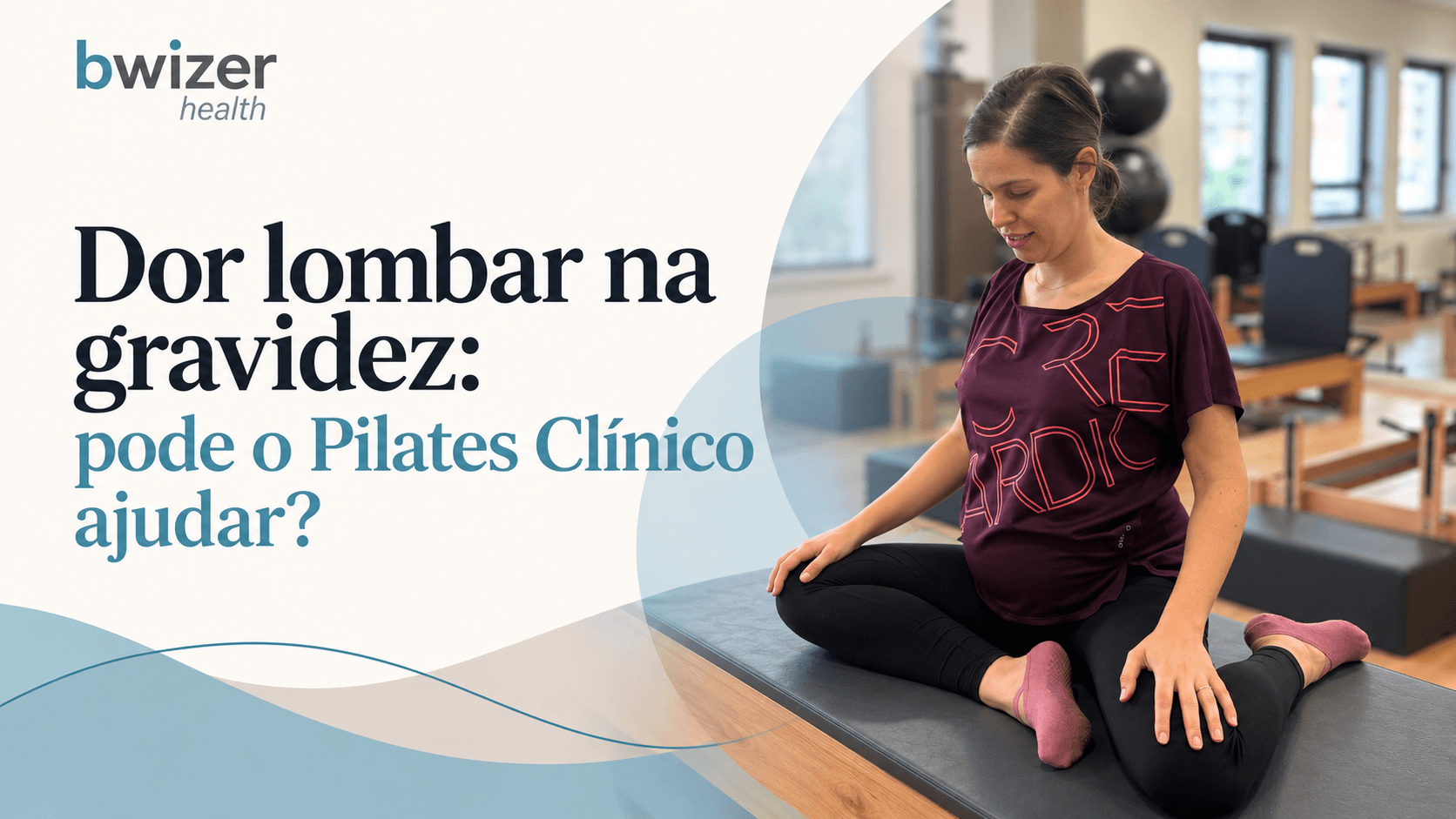
Clinical Pilates can be an exercise option during pregnancy and may help some women reduce low back pain, improve function and stay active, provided it is appropriately adapted to the stage of pregnancy and to individual needs.
Musculoskeletal pain can be a major concern during pregnancy, with the lower back and pelvic region among the areas most commonly affected. Research estimates that more than two thirds of pregnant women, and up to 90% in some prevalence studies, experience low back pain.
In some cases, symptoms may become more noticeable as pregnancy progresses, significantly interfering with work, daily activities, physical mobility and sleep, which can have a major impact on quality of life. It is also a common reason for sick leave during pregnancy.
Why does it happen? Is it really just a matter of posture?
The short answer is no. Pregnancy involves complex physiological, biomechanical and hormonal changes:
- Hormonal changes can reduce tension in ligamentous structures, contributing to increased joint mobility.
- Postural changes sustained over long periods: as the abdomen grows, the centre of gravity shifts forwards, which may contribute to changes in posture and spinal curvature.
- Muscular overload: stretching of the abdominal muscles may increase the demands placed on the back muscles, contributing to fatigue and, in some cases, discomfort.
- Weight gain: increased body weight places greater demands on musculoskeletal structures.
However, low back and pelvic pain during pregnancy is multifactorial. It is therefore important to recognise that pregnancy-related low back pain is not simply a biomechanical, physiological or hormonal phenomenon, nor is it explained by these factors alone. Pain occurs within a broader biopsychosocial context that goes beyond structural changes.
Pregnancy also involves important psychological adaptations, and factors such as pregnancy-related anxiety, stress and depressive symptoms are closely associated with pain perception and intensity.
Research also suggests that emotional stress and poor sleep quality may exacerbate pain, creating a cycle that can reduce autonomy and negatively affect perceived quality of life.
How can Clinical Pilates help?
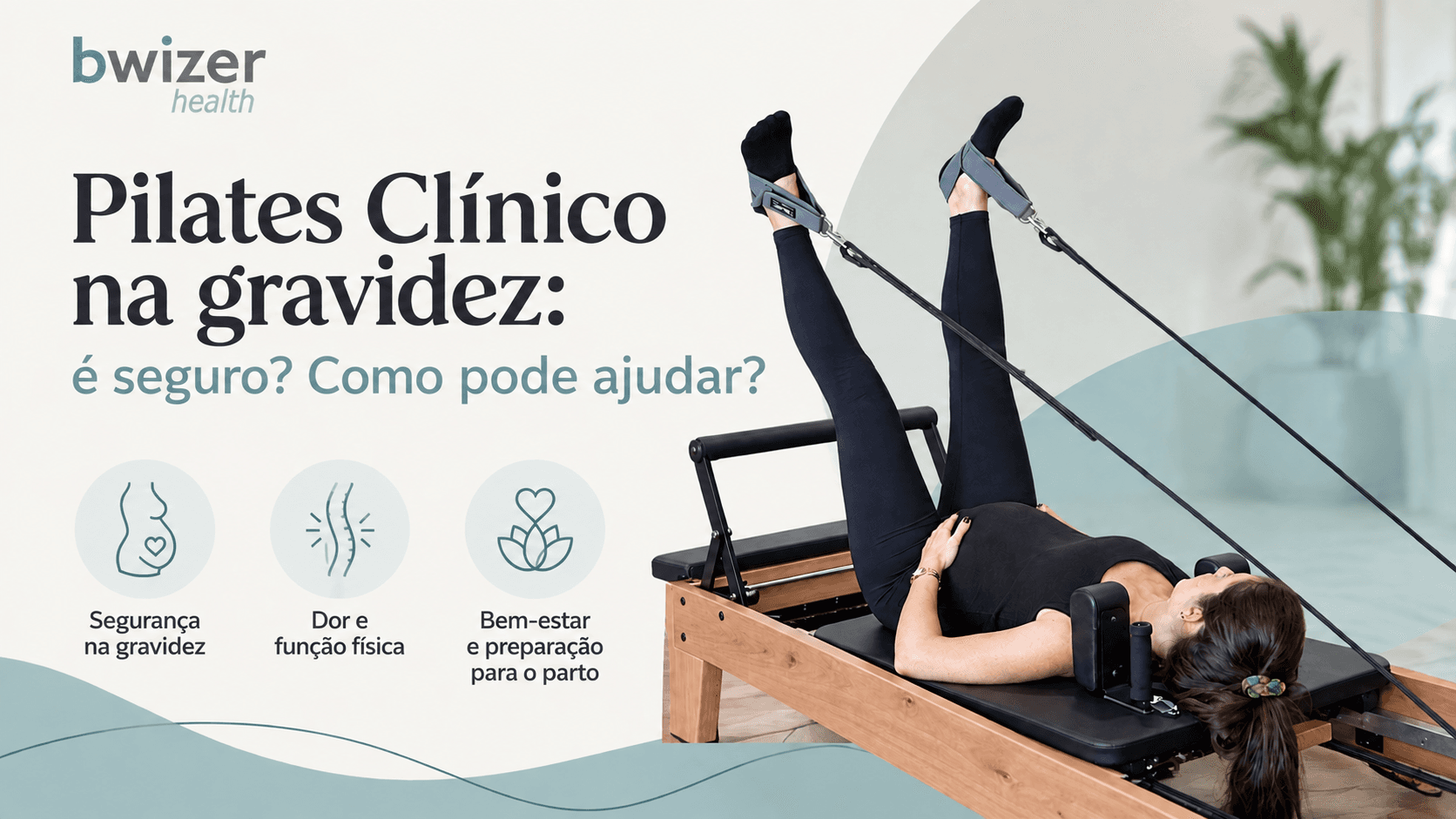
In Physiotherapy, Clinical Pilates can be used as one of the exercise-based strategies during pregnancy, combining strength, movement control, mobility and breathing. The aim is not to “correct” posture, but to help women remain active, improve their physical capacity and find comfortable movement strategies for everyday life.
Attention to breathing and movement may also promote relaxation, body awareness and wellbeing. In group sessions, social interaction and shared experiences can provide an additional source of support during pregnancy.
Guidance from a Physiotherapist allows exercises to be adapted to the progression of pregnancy, the symptoms experienced and each woman’s physical capacity.
What benefits can Clinical Pilates offer during pregnancy?
Current evidence suggests that Clinical Pilates may provide benefits across several areas.
Pain reduction
Scientific research supports the potential effectiveness of Clinical Pilates in reducing the intensity of low back pain. Some studies have also reported beneficial effects on pain during labour.
Disability and function
There is some evidence that Clinical Pilates may help reduce functional disability and work absenteeism. Studies also report improvements in functional capacity, flexibility and spinal mobility.
Lumbopelvic stability
Clinical Pilates may support lumbopelvic stability during dynamic movement through strengthening of the core, including the deep abdominal muscles, as well as the pelvic floor muscles. This may contribute to improving or maintaining tolerance to everyday activities.
Quality of life and sleep
Clinical Pilates may improve perceived health and quality of life during pregnancy, including specific areas such as sleep quality, for example by reducing insomnia symptoms.
Why can Clinical Pilates be a relevant option during pregnancy?
Supervised physical exercise is generally recommended to help manage low back pain during pregnancy. Clinical Pilates combines strength, mobility, movement control and breathing within an exercise session that can be adapted to different stages of pregnancy.
Its main advantage is not that it is necessarily superior to other forms of exercise, but that positions, range of movement, load and difficulty can be adjusted according to each woman’s needs, abilities and symptoms.
Clinical Pilates during pregnancy can therefore be characterised by:
- A specific movement focus: it places particular emphasis on core control and postural stability, which may be especially useful when symptoms are associated with reduced pelvic stability.
- A mind-body approach: breathing and body awareness may offer additional psychological benefits, such as reduced anxiety, which are not the primary focus of purely strength- or endurance-based exercise.
- Safety and adaptability: Clinical Pilates is generally considered a low-impact and easily adaptable form of exercise, making it a possible non-pharmacological option for pregnant women with mild to moderate low back pain.
What can you do today?
Pay attention to when your pain appears or becomes worse: for example, after sitting for a long time, walking, turning in bed or carrying out a particular task.
Keeping a brief record for a few days of when the pain occurs and what makes it better or worse may help guide a future assessment and identify strategies that are better suited to your daily routine.
When should you seek advice before starting?
For most uncomplicated pregnancies, remaining physically active is recommended. However, if your pregnancy has been considered high risk, you have obstetric complications, you have been advised to limit physical activity, or new symptoms appear during exercise, you should speak to the healthcare team supporting your pregnancy before starting or continuing an exercise programme.
If you are considering Clinical Pilates because of low back or pelvic pain, an assessment by a Physiotherapist can help identify which movements, positions and loads are most appropriate for your individual situation.
At Bwizer Health, Clinical Pilates is supervised by Physiotherapists and adapted to the needs of each stage of pregnancy. Contact us to find out which approach may be most suitable for you.
This article is for informational purposes only and does not replace an individual assessment by a healthcare professional.
References
Baradwan, S., Khadawardi, K., Alayed, N. M., Akkour, K. M., Mahmoud, M. S., Abdelhakim, A. M., Sunoqrot, M., & Hamid, A. S. A. (2024). The effect of Pilates exercise during pregnancy on delivery outcomes: A systematic review and meta-analysis. Women & Health, 64(2), 131–141. https://doi.org/10.1080/03630242.2024.2304893
Ferraz, V. de S., Peixoto, C., Resstel, A. P. F., Paula, Y. T. C. de, & Pegorare, A. B. G. de S. (2023). Effect of the Pilates method on pain and quality of life in pregnancy: A systematic review and meta-analysis. Journal of Bodywork and Movement Therapies, 35, 220–227. https://doi.org/10.1016/j.jbmt.2023.04.076
Guo, L., Song, H., Suo, L., Yang, J., Lv, X., & Han, W. (2026). Optimal types and doses of exercise for improving sleep quality in perinatal women: A systematic review and network meta-analysis based on randomized controlled trials. BMC Pregnancy and Childbirth, 26, 168. https://doi.org/10.1186/s12884-026-08673-6
Guo, L., Li, Y., Suo, L., Yang, J., Lv, X., Song, H., & Han, W. (2026). Effects of mind–body therapies on sleep quality in perinatal women: A systematic review and meta-analysis of randomized controlled trials. Frontiers in Public Health, 14, 1857655. https://doi.org/10.3389/fpubh.2026.1857655
Haseli, A., Eghdampour, F., Zarei, H., Karimian, Z., & Rasoal, D. (2024). Optimizing labor duration with Pilates: Evidence from a systematic review and meta-analysis of randomized controlled trials. BMC Pregnancy and Childbirth, 24(1), 573. https://doi.org/10.1186/s12884-024-06785-5
Jiang, R., Shu, L., Li, Y., Wang, F., Pan, J., Xu, Y., Ye, X., Gao, N., & Huang, C. (2026). Effectiveness of exercise on perinatal depression and anxiety symptoms: A network meta-analysis and dose–response analysis. International Journal of Gynecology & Obstetrics, 173(3), 1308–1324. https://doi.org/10.1002/ijgo.70781
Li, Y., Lu, H., Zhang, L., Ren, Y., Dai, X., & Lin, L. (2025). Pilates exercise in pregnancy: A systematic review and meta-analysis. BMC Sports Science, Medicine and Rehabilitation, 17(1), 20. https://doi.org/10.1186/s13102-025-01067-9
Mazzarino, M., Kerr, D., Wajswelner, H., & Morris, M. E. (2015). Pilates method for women’s health: Systematic review of randomized controlled trials. Archives of Physical Medicine and Rehabilitation, 96(12), 2231–2242. https://doi.org/10.1016/j.apmr.2015.04.005
Mérida-Téllez, J. M., Vázquez-Lara, J. M., Fernández-Carrasco, F. J., Gómez-Salgado, J., Macías-Toronjo, I., Muñoz-Vela, F. J., Fagundo-Rivera, J., Palomo-Gómez, R., & Rodríguez-Díaz, L. (2025). Effects of Pilates on the quality of life of pregnant women during pregnancy: A systematic review. Medicine, 104(17), e41967. https://doi.org/10.1097/MD.0000000000041967
Muhamad, R. S., Hidayat, S. N., Ranindya, G. A., Latanya, R. F., & Hutami, C. M. (2025). Effects of Pilates in reducing depression, anxiety, and stress in pregnant women: A systematic review and meta analysis. Journal of Social Research, 4(8), 2019–2030. https://doi.org/10.55324/josr.v4i8.2712
Song, C., Shen, Y., Tang, X., Li, Z., Li, X., Zhang, X., Xiang, Y., Ma, J., Tian, X., Li, H., Li, F., & Li, H. (2026). Pilates during pregnancy for maternal musculoskeletal pain and discomfort: A systematic review and meta-analysis. BMJ Open, 16(5), e112441. https://doi.org/10.1136/bmjopen-2025-112441
Yilmaz, T., Taş, Ö., Günaydin, S., & Kaya, H. D. (2023). The effect of Pilates on pain during pregnancy and labor: A systematic review and meta-analysis. Revista da Associação Médica Brasileira, 69(10), e20230441. https://doi.org/10.1590/1806-9282.20230441
Yu, H., Mu, Q., Lv, X., Chen, S., & He, H. (2024). Effects of an exercise intervention on maternal depression, anxiety, and fatigue: A systematic review and meta-analysis. Frontiers in Psychology, 15, 1473710. https://doi.org/10.3389/fpsyg.2024.1473710
Zaman, A. Y. (2023). Obstetric, maternal, and neonatal outcomes after Pilates exercise during pregnancy: A systematic review and meta-analysis. Medicine, 102(21), e33688. https://doi.org/10.1097/MD.0000000000033688