Clinical Pilates: an ally for Physiotherapists in the treatment of lumbar disc herniation

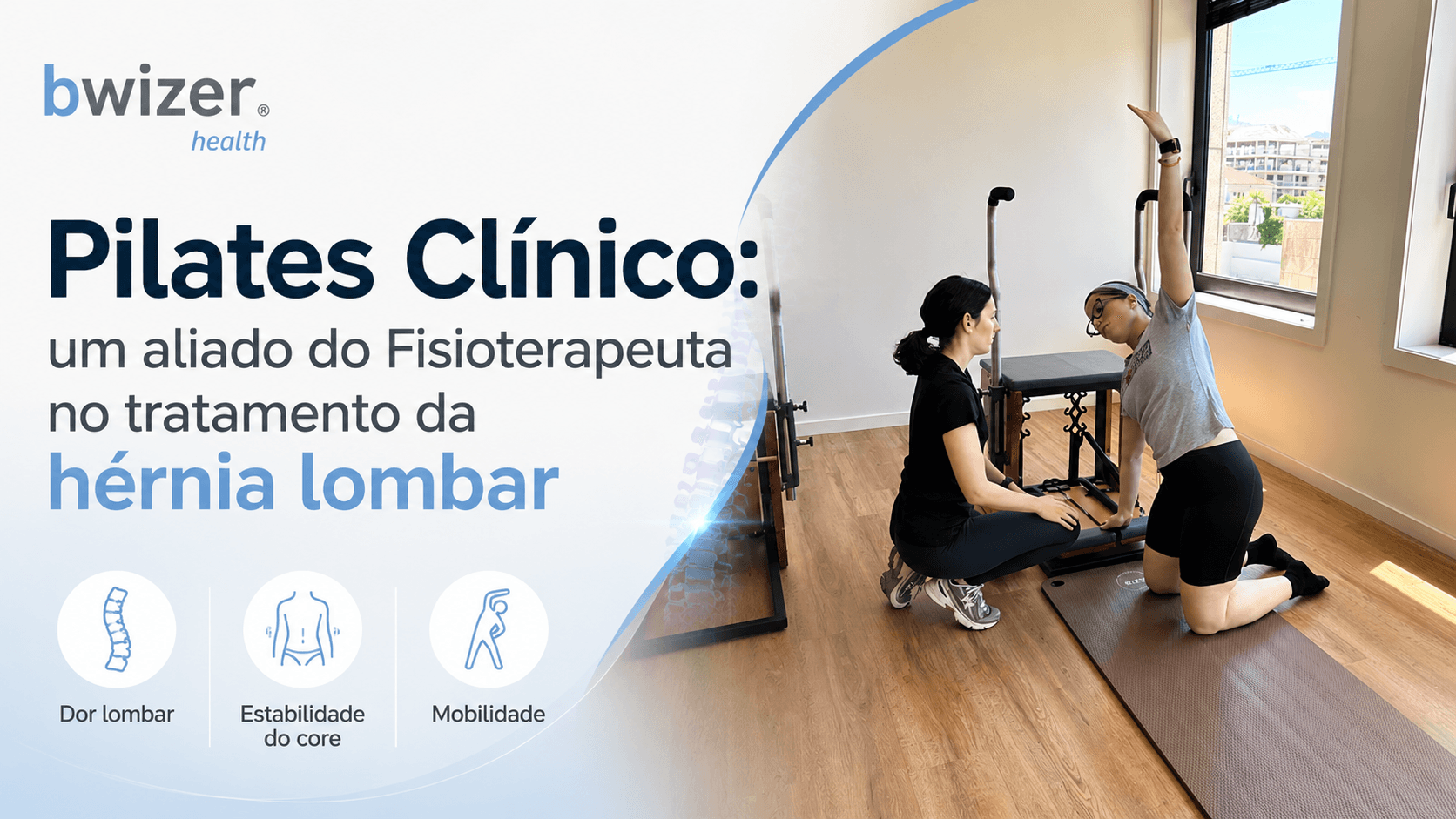
Current evidence highlights Clinical Pilates as one of the most recommended non-surgical physiotherapy interventions for managing symptoms and improving quality of life in people experiencing pain associated with lumbar disc herniation.
Although it is not necessarily the cause of low back pain, a lumbar disc herniation can still be a common source of back pain and physical limitation. When the disc that acts as a “shock absorber” between the vertebrae undergoes degeneration or displacement, it may compress nearby nerves, causing significant pain and making simple movements such as bending down or walking more difficult.
Current evidence highlights Clinical Pilates as one of the non-surgical physiotherapy interventions that may be recommended to help manage symptoms and restore quality of life in people with this condition.
How can Physiotherapists integrate Clinical Pilates into the treatment of lumbar disc herniation?
Clinical Pilates is more than a series of stretching exercises. It is a method that integrates body and mind, focusing on core stability, movement precision and breathing control. In people with lumbar disc herniation, research frequently identifies changes in the function of the deep muscles that help support the spine, such as the transversus abdominis and multifidus muscles.
Clinical Pilates focuses on three main areas:
- Deep trunk muscles – strengthening these muscles helps improve spinal stability and the body's ability to manage the loads placed on the spine during movement and everyday activities.
- Improved mobility – through controlled movements, Clinical Pilates can help reduce stiffness and restore range of motion. This can promote more comfortable and efficient movement and improve the way the body manages load.
- Reducing kinesiophobia (fear of movement) – many people with lumbar disc herniation avoid certain movements because they are afraid of experiencing pain. Clinical Pilates provides a safe and controlled environment in which they can gradually regain confidence in their own body, helping to break the cycle of pain, avoidance and inactivity.
What does Science say?
Scientific evidence suggests that Clinical Pilates can be effective in reducing pain and functional disability in people with low back pain and disc-related conditions.
- Improvements within weeks: many patients experience meaningful improvements following programmes lasting approximately 6 to 12 weeks.
- Quality of life: in addition to reducing pain, Clinical Pilates may improve perceived health, physical function and vitality.
- Safety: it is generally considered a safe exercise-based intervention for most people with low back pain, with a low risk of adverse effects when appropriately prescribed and supervised by a Physiotherapist.
Clinical Pilates Matwork or Equipment-Based?
Both approaches can be beneficial. Clinical Pilates Matwork uses body weight and simple accessories and can be an effective way to develop trunk control, strength and movement awareness.
Equipment-based Clinical Pilates, using apparatus such as the Reformer or Cadillac, incorporates springs that can either assist movement for people experiencing greater pain or provide additional resistance as strength and confidence improve.
Some studies suggest that equipment-based Pilates may also provide advantages in maintaining improvements in muscle activation over time.
What is the recommended “dose”?
As with any other form of physical exercise, there is no single prescription that can — or should - be applied to everyone. Each person should be assessed individually by a Physiotherapist, taking into account their condition and clinical presentation, as well as their preferences and goals, so that the intervention can be appropriately tailored to their specific needs.
However, many successful protocols used in scientific studies involve practising 2 to 3 times per week. Consistency remains important for improvements in strength, movement control and physical function to become sustainable over time.
Conclusion
Clinical Pilates offers a structured way to return to movement safely. Rather than “curing” the herniated disc itself, the goal is to help the body become better prepared to tolerate the demands and loads of everyday life, reducing pain and restoring independence.
If you experience pain associated with a lumbar disc herniation, it is important to seek advice from a qualified professional, such as a Physiotherapist trained in Clinical Pilates, so that your exercise programme can be adapted to your individual limitations, needs and goals. Book your appointment.
References
Arslan, S., & Ülger, Ö. (2025). The effect of exercise in the treatment of lumbar disc herniation: A systematic review. Acta Neurologica Belgica, 125(5), 1209–1224. https://doi.org/10.1007/s13760-025-02767-2
de Freitas, C. D., Costa, D. A., Carvas Junior, N., & Civile, V. T. (2020). Effects of the Pilates method on kinesiophobia associated with chronic non-specific low back pain: Systematic review and meta-analysis. Journal of Bodywork and Movement Therapies, 24(3), 300–306. https://doi.org/10.1016/j.jbmt.2020.05.005
Denham-Jones, L., Gaskell, L., Spence, N., & Pigott, T. (2022). A systematic review of the effectiveness of Pilates on pain, disability, physical function, and quality of life in older adults with chronic musculoskeletal conditions. Musculoskeletal Care, 20(1), 10–30. https://doi.org/10.1002/msc.1563
Franks, J., Thwaites, C., & Morris, M. E. (2023). Pilates to improve core muscle activation in chronic low back pain: A systematic review. Healthcare, 11(10), 1404. https://doi.org/10.3390/healthcare11101404
Hayden, J. A., Ellis, J., Ogilvie, R., Stewart, S. A., Bagg, M. K., Stanojevic, S., Yamato, T. P., & Saragiotto, B. T. (2021). Some types of exercise are more effective than others in people with chronic low back pain: A network meta-analysis. Journal of Physiotherapy, 67(4), 252–262. https://doi.org/10.1016/j.jphys.2021.09.004
Miyamoto, G. C., Costa, L. O. P., & Cabral, C. M. N. (2013). Efficacy of the Pilates method for pain and disability in patients with chronic nonspecific low back pain: A systematic review with meta-analysis. Brazilian Journal of Physical Therapy, 17(6), 517–532. https://doi.org/10.1590/S1413-35552012005000127
Taşpınar, G., Angın, E., & Oksüz, S. (2023). The effects of Pilates on pain, functionality, quality of life, flexibility and endurance in lumbar disc herniation. Journal of Comparative Effectiveness Research, 12(1), e220144. https://doi.org/10.2217/cer-2022-0144
Wong, C. M., Rugg, B., & Geere, J.-A. (2023). The effects of Pilates exercise in comparison to other forms of exercise on pain and disability in individuals with chronic non-specific low back pain: A systematic review with meta-analysis. Musculoskeletal Care, 21(1), 78–96. https://doi.org/10.1002/msc.1667
Yamato, T. P., Maher, C. G., Saragiotto, B. T., Hancock, M. J., Ostelo, R. W. J. G., Cabral, C. M. N., Menezes Costa, L. C., & Costa, L. O. P. (2015). Pilates for low back pain. Cochrane Database of Systematic Reviews, (7), CD010265. https://doi.org/10.1002/14651858.CD010265.pub2