Clinical Pilates in the Treatment of Chronic Low Back Pain: Benefits and Recommendations

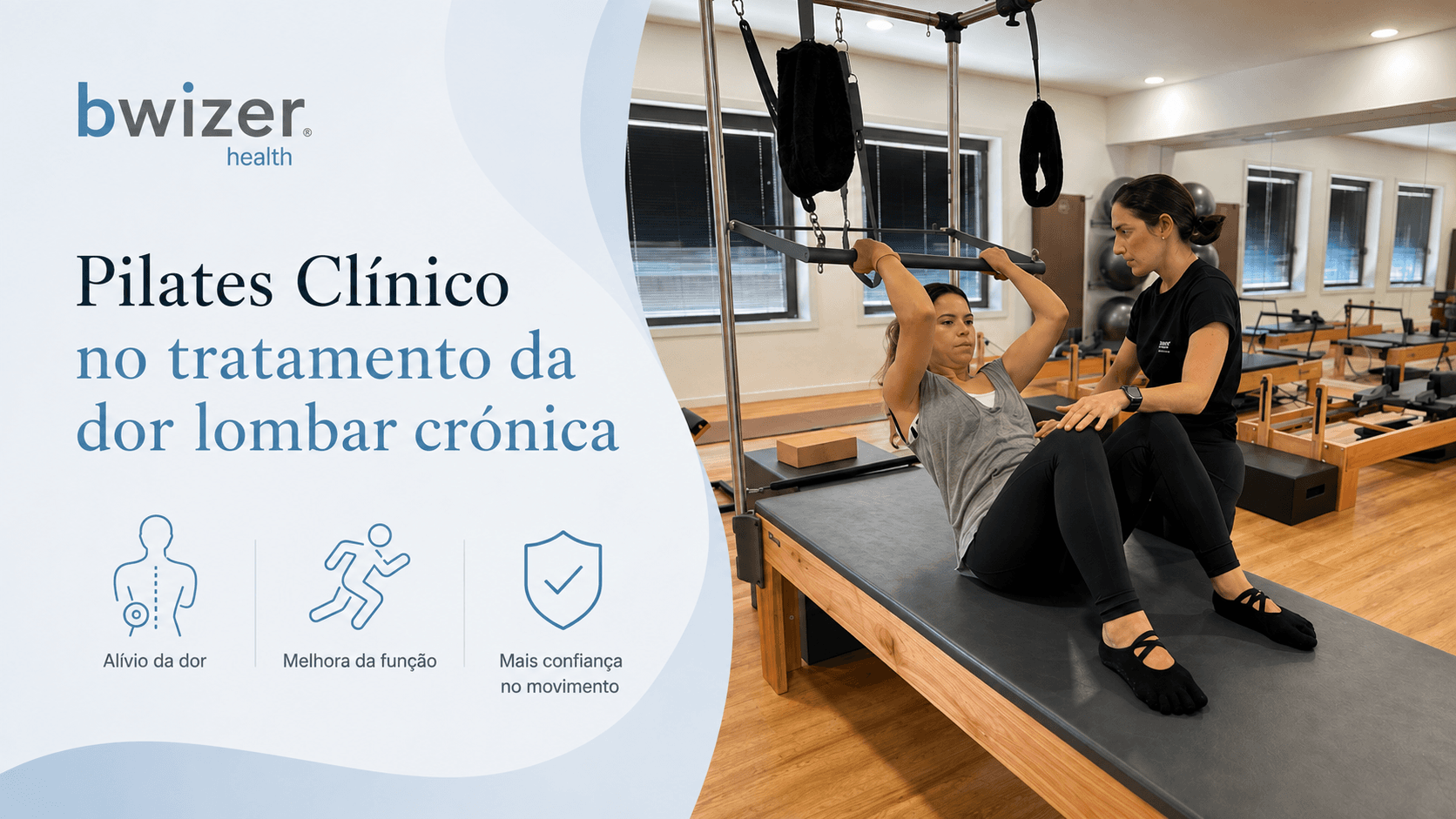
Low back pain, particularly when it becomes chronic, can limit movement, independence and confidence in everyday activities. Clinical Pilates is one of the exercise-based approaches used in this context, combining movement control, strengthening, mobility and body awareness. But what can it actually offer - and how should it be approached?
What is chronic low back pain?
Low back pain is one of the most common musculoskeletal conditions and a major cause of disability. When it persists for more than 12 weeks, it is generally classified as chronic low back pain.
For most people, the pain is considered non-specific: there is no single structural change or identifiable disease that, on its own, explains the symptoms. For this reason, management tends to focus less on finding a specific “structure to blame” and more on restoring function, physical capacity and confidence in movement.
What is Clinical Pilates?
The Pilates method was developed as a system of physical and mental conditioning. Clinical Pilates adapts its principles and exercises to a rehabilitation setting, allowing movements to be selected, modified and progressed according to each person’s condition, abilities and goals.
The practice is based on principles such as concentration, control, precision, breathing, fluidity of movement and coordinated activation of the central region of the body. In a clinical setting, these principles are used to improve movement quality and gradually increase exercise tolerance.
How can Clinical Pilates help with chronic low back pain?
The effects of Clinical Pilates do not depend on a single mechanism. Its potential benefits arise from a combination of physical exercise, motor control, gradual exposure to movement and increased body awareness.
Trunk control and coordination
Clinical Pilates places particular emphasis on controlling the lumbopelvic region and coordinating the trunk muscles, including the transversus abdominis and multifidus. Rather than thinking solely in terms of “strengthening the core”, it can be more useful to view this as training control, endurance and coordination across different tasks and positions.
Strength and stability
Exercises can increase the capacity of the trunk muscles to support and control movement. This may contribute to more efficient performance of everyday tasks and greater tolerance to the loads involved in walking, bending, standing up or carrying objects.
Mobility and flexibility
Clinical Pilates combines strengthening exercises with movements that explore joint range of motion and flexibility. For people with chronic low back pain, this may help reduce feelings of stiffness and restore movements that have become cautious or restricted.
Confidence in movement and kinesiophobia
Persistent pain can lead some people to avoid certain movements because they are afraid of worsening their symptoms. This fear of movement — known as kinesiophobia — can contribute to reduced activity and greater functional limitations.
By providing gradual, controlled and individually adapted exposure to movement, Clinical Pilates may help restore confidence and break this cycle of avoidance.
What does the scientific evidence show?
Evidence suggests that Clinical Pilates can provide benefits in terms of pain and functional disability in people with chronic non-specific low back pain.
Pain and physical function
Clinical Pilates may reduce pain intensity, particularly in the short to medium term. Improvements in functional disability may also make everyday activities easier to perform.
Psychosocial benefits
Clinical Pilates may help reduce fear of movement and increase confidence in performing activities. The approach also tends to be well accepted, particularly when exercises are varied and adapted to the individual.
In summary, the main argument in favour of Pilates is not that there is a “special” exercise capable of correcting the spine, but rather that the method provides a structured way to return to movement, develop physical capacity and rebuild confidence.
Mat Pilates or equipment-based Pilates?
Clinical Pilates can be performed on a mat (Pilates Matwork) or using equipment such as the Reformer and Cadillac. Both approaches can be used for people with chronic low back pain.
Pilates equipment uses springs to provide adjustable assistance and resistance. This can make certain exercises easier to adapt while offering different challenges for strength and movement control.
In practice, the choice between mat-based and equipment-based Pilates should be made together with the physiotherapist and should take into account the individual assessment, the person’s goals and experience, and how the exercises can be safely progressed.
How often should Clinical Pilates be practised?
Research reports benefits from Clinical Pilates programmes performed two to three times per week for at least 8 to 12 weeks.
These figures should be understood as examples of exercise doses used in research and clinical programmes — not as a universal prescription. A physiotherapist can adjust the frequency, duration and difficulty of the exercises according to each person’s current capacity, symptoms, clinical presentation and goals.
Who may benefit and when should you seek professional support?
Clinical Pilates may be an option for people with chronic low back pain who want to improve their function, strength, mobility and confidence in movement.
One of the advantages of a clinical setting is the ability to adapt exercises to individual limitations and abilities and to progress them gradually.
If there is uncertainty about the cause of the pain, significant limitations or difficulty tolerating exercise, seeking advice from a qualified professional is recommended. A certified physiotherapist with training in Clinical Pilates can assess the individual situation and select exercises that are appropriate for the person’s goals and needs.
Take control of your low back pain with us. Book your session here.
This article is for informational purposes only and does not replace an individual assessment by a healthcare professional.
References
Aladro-Gonzalvo, A. R., Araya-Vargas, G. A., Machado-Díaz, M., & Salazar-Rojas, W. (2013). Pilates-based exercise for persistent, non-specific low back pain and associated functional disability: A meta-analysis with meta-regression. Journal of Bodywork and Movement Therapies, 17(1), 125–136. https://doi.org/10.1016/j.jbmt.2012.08.003
Byrnes, K., Wu, P.-J., & Whillier, S. (2018). Is Pilates an effective rehabilitation tool? A systematic review. Journal of Bodywork and Movement Therapies, 22(1), 192–202. https://doi.org/10.1016/j.jbmt.2017.04.008
Comachio, J., Beckenkamp, P. R., Ho, E. K.-Y., Abdel Shaheed, C., Stamatakis, E., Ferreira, M. L., Lan, Q., Mork, P. J., Holtermann, A., Wang, D. X. M., & Ferreira, P. H. (2025). Benefits and harms of exercise therapy and physical activity for low back pain: An umbrella review. Journal of Sport and Health Science, 14, 101038. https://doi.org/10.1016/j.jshs.2025.101038
Denham-Jones, L., Gaskell, L., Spence, N., & Pigott, T. (2022). A systematic review of the effectiveness of Pilates on pain, disability, physical function, and quality of life in older adults with chronic musculoskeletal conditions. Musculoskeletal Care, 20(1), 10–30. https://doi.org/10.1002/msc.1563
de Freitas, C. D., Costa, D. A., Carvas Junior, N., & Civile, V. T. (2020). Effects of the Pilates method on kinesiophobia associated with chronic non-specific low back pain: Systematic review and meta-analysis. Journal of Bodywork and Movement Therapies, 24(3), 300–306. https://doi.org/10.1016/j.jbmt.2020.05.005
Fernández-Rodríguez, R., Álvarez-Bueno, C., Cavero-Redondo, I., Torres-Costoso, A., Pozuelo-Carrascosa, D. P., Reina-Gutiérrez, S., Pascual-Morena, C., & Martínez-Vizcaíno, V. (2022). Best exercise options for reducing pain and disability in adults with chronic low back pain: Pilates, strength, core-based, and mind-body. A network meta-analysis. Journal of Orthopaedic & Sports Physical Therapy, 52(8), 505–521. https://doi.org/10.2519/jospt.2022.10671
Franks, J., Thwaites, C., & Morris, M. E. (2023). Pilates to improve core muscle activation in chronic low back pain: A systematic review. Healthcare, 11(10), 1404. https://doi.org/10.3390/healthcare11101404
Geneen, L. J., Moore, R. A., Clarke, C., Martin, D., Colvin, L. A., & Smith, B. H. (2017). Physical activity and exercise for chronic pain in adults: An overview of Cochrane Reviews. Cochrane Database of Systematic Reviews, (4), CD011279. https://doi.org/10.1002/14651858.CD011279.pub3
Gilliam, J. R., George, S. Z., Norman, K. S., Hendren, S., Sahu, P. K., & Silfies, S. P. (2023). Mind-body exercise performed by physical therapists for reducing pain and disability in low back pain: A systematic review with meta-analysis. Archives of Physical Medicine and Rehabilitation, 104(5), 776–789. https://doi.org/10.1016/j.apmr.2022.10.004
Grooten, W. J. A., Boström, C., Dedering, Å., Halvorsen, M., Kuster, R. P., Nilsson-Wikmar, L., Olsson, C. B., Rovner, G., Tseli, E., & Rasmussen-Barr, E. (2022). Summarizing the effects of different exercise types in chronic low back pain: A systematic review of systematic reviews. BMC Musculoskeletal Disorders, 23(1), 801. https://doi.org/10.1186/s12891-022-05722-x
Hasanpour-Dehkordi, A., Dehghani, A., & Solati, K. (2017). A comparison of the effects of Pilates and McKenzie training on pain and general health in men with chronic low back pain: A randomized trial. Indian Journal of Palliative Care, 23(1), 36–40. https://doi.org/10.4103/0973-1075.197945
Hayden, J. A., Ellis, J., Ogilvie, R., Stewart, S. A., Bagg, M. K., Stanojevic, S., Yamato, T. P., & Saragiotto, B. T. (2021). Some types of exercise are more effective than others in people with chronic low back pain: A network meta-analysis. Journal of Physiotherapy, 67(4), 252–262. https://doi.org/10.1016/j.jphys.2021.09.004
Arslan, S., & Ülger, Ö. (2025). The effect of exercise in the treatment of lumbar disc herniation: A systematic review. Acta Neurologica Belgica, 125(5), 1209–1224. https://doi.org/10.1007/s13760-025-02767-2
Huang, J., & Park, H.-Y. (2023). Effect of Pilates training on pain and disability in patients with chronic low back pain: A systematic review and meta-analysis based on randomized controlled trials. Physical Activity and Nutrition, 27(1), 16–29. https://doi.org/10.20463/pan.2023.0003
Jadhakhan, F., Sobeih, R., & Falla, D. (2023). Effects of exercise/physical activity on fear of movement in people with spine-related pain: A systematic review. Frontiers in Psychology, 14, 1213199. https://doi.org/10.3389/fpsyg.2023.1213199
Jiang, Y., Xu, Y., Kong, X., Zhao, E., Ma, C., Lv, Y., Xu, H., Sun, H., & Gao, X. (2024). How to tackle non-specific low back pain among adult patients? A systematic review with a meta-analysis to compare four interventions. Journal of Orthopaedic Surgery and Research, 19(1), 1. https://doi.org/10.1186/s13018-023-04392-2
Kamioka, H., Tsutani, K., Katsumata, Y., Yoshizaki, T., Okuizumi, H., Okada, S., Park, S.-J., Kitayuguchi, J., Abe, T., & Mutoh, Y. (2016). Effectiveness of Pilates exercise: A quality evaluation and summary of systematic reviews based on randomized controlled trials. Complementary Therapies in Medicine, 25, 1–19. https://doi.org/10.1016/j.ctim.2015.12.018
Li, Y., Yan, L., Hou, L., Zhang, X., Zhao, H., Yan, C., Li, X., Li, Y., Chen, X., & Ding, X. (2023). Exercise intervention for patients with chronic low back pain: A systematic review and network meta-analysis. Frontiers in Public Health, 11, 1155225. https://doi.org/10.3389/fpubh.2023.1155225
Lim, E. C. W., Poh, R. L. C., Low, A. Y., & Wong, W. P. (2011). Effects of Pilates-based exercises on pain and disability in individuals with persistent nonspecific low back pain: A systematic review with meta-analysis. Journal of Orthopaedic & Sports Physical Therapy, 41(2), 70–80. https://doi.org/10.2519/jospt.2011.3393
Lin, H.-T., Hung, W.-C., Hung, J.-L., Wu, P.-S., Liaw, L.-J., & Chang, J.-H. (2016). Effects of Pilates on patients with chronic non-specific low back pain: A systematic review. Journal of Physical Therapy Science, 28(10), 2961–2969. https://doi.org/10.1589/jpts.28.2961
Liu, Y., Yu, Y., Lu, F., & Liu, J. (2026). Comparative effectiveness of different core muscle training regimens for chronic non-specific low back pain: A systematic review and meta-analysis. Frontiers in Medicine, 13, 1814834. https://doi.org/10.3389/fmed.2026.1814834
Miyamoto, G. C., Costa, L. O. P., & Cabral, C. M. N. (2013). Efficacy of the Pilates method for pain and disability in patients with chronic nonspecific low back pain: A systematic review with meta-analysis. Brazilian Journal of Physical Therapy, 17(6), 517–532. https://doi.org/10.1590/S1413-35552012005000127
Owen, P. J., Miller, C. T., Mundell, N. L., Verswijveren, S. J. J. M., Tagliaferri, S. D., Brisby, H., Bowe, S. J., & Belavy, D. L. (2020). Which specific modes of exercise training are most effective for treating low back pain? Network meta-analysis. British Journal of Sports Medicine, 54(21), 1279–1287. https://doi.org/10.1136/bjsports-2019-100886
Patti, A., Bianco, A., Paoli, A., Messina, G., Montalto, M. A., Bellafiore, M., Battaglia, G., Iovane, A., & Palma, A. (2015). Effects of Pilates exercise programs in people with chronic low back pain: A systematic review. Medicine, 94(4), e383. https://doi.org/10.1097/MD.0000000000000383
Patti, A., Thornton, J. S., Giustino, V., Drid, P., Paoli, A., Schulz, J. M., Palma, A., & Bianco, A. (2024). Effectiveness of Pilates exercise on low back pain: A systematic review with meta-analysis. Disability and Rehabilitation, 46(16), 3535–3548. https://doi.org/10.1080/09638288.2023.2251404
Pereira, L. M., Obara, K., Dias, J. M., Menacho, M. O., Guariglia, D. A., Schiavoni, D., Pereira, H. M., & Cardoso, J. R. (2012). Comparing the Pilates method with no exercise or lumbar stabilization for pain and functionality in patients with chronic low back pain: Systematic review and meta-analysis. Clinical Rehabilitation, 26(1), 10–20. https://doi.org/10.1177/0269215511411113
Posadzki, P., Lizis, P., & Hagner-Derengowska, M. (2011). Pilates for low back pain: A systematic review. Complementary Therapies in Clinical Practice, 17(2), 85–89. https://doi.org/10.1016/j.ctcp.2010.09.005
Aali, S., Rezazadeh, F., Imani, F., Nabati Sefidekhan, M., Badicu, G., Poli, L., Fischetti, F., Cataldi, S., & Greco, G. (2025). Effects of exercise-based rehabilitation on lumbar degenerative disc disease: A systematic review. Healthcare, 13(15), 1938. https://doi.org/10.3390/healthcare13151938
Cancelliere, C., Verville, L., Southerst, D., Yu, H., Hayden, J. A., Ogilvie, R., Bussières, A., Gross, D. P., Pereira, P., Mior, S., Tricco, A. C., Cedraschi, C., Brunton, G., Nordin, M., Wong, J. J., Shearer, H. M., Connell, G., & Hincapié, C. A. (2023). Systematic review procedures for the World Health Organization (WHO) evidence syntheses on benefits and harms of structured and standardized education/advice, structured exercise programs, transcutaneous electrical nerve stimulation (TENS), and needling therapies for the management of chronic low back pain in adults. Journal of Occupational Rehabilitation, 33(4), 618–624. https://doi.org/10.1007/s10926-023-10156-w
Wells, C., Kolt, G. S., Marshall, P., Hill, B., & Bialocerkowski, A. (2013). Effectiveness of Pilates exercise in treating people with chronic low back pain: A systematic review of systematic reviews. BMC Medical Research Methodology, 13, 7. https://doi.org/10.1186/1471-2288-13-7
Wells, C., Kolt, G. S., Marshall, P., Hill, B., & Bialocerkowski, A. (2014). The effectiveness of Pilates exercise in people with chronic low back pain: A systematic review. PLoS ONE, 9(7), e100402. https://doi.org/10.1371/journal.pone.0100402
Wong, C. M., Rugg, B., & Geere, J.-A. (2023). The effects of Pilates exercise in comparison to other forms of exercise on pain and disability in individuals with chronic non-specific low back pain: A systematic review with meta-analysis. Musculoskeletal Care, 21(1), 78–96. https://doi.org/10.1002/msc.1667
Yamato, T. P., Maher, C. G., Saragiotto, B. T., Hancock, M. J., Ostelo, R. W. J. G., Cabral, C. M. N., Menezes Costa, L. C., & Costa, L. O. P. (2015). Pilates for low back pain. Cochrane Database of Systematic Reviews, (7), CD010265. https://doi.org/10.1002/14651858.CD010265.pub2
Yu, Z., Yin, Y., Wang, J., Zhang, X., Cai, H., & Peng, F. (2023). Efficacy of Pilates on pain, functional disorders and quality of life in patients with chronic low back pain: A systematic review and meta-analysis. International Journal of Environmental Research and Public Health, 20(4), 2850. https://doi.org/10.3390/ijerph20042850