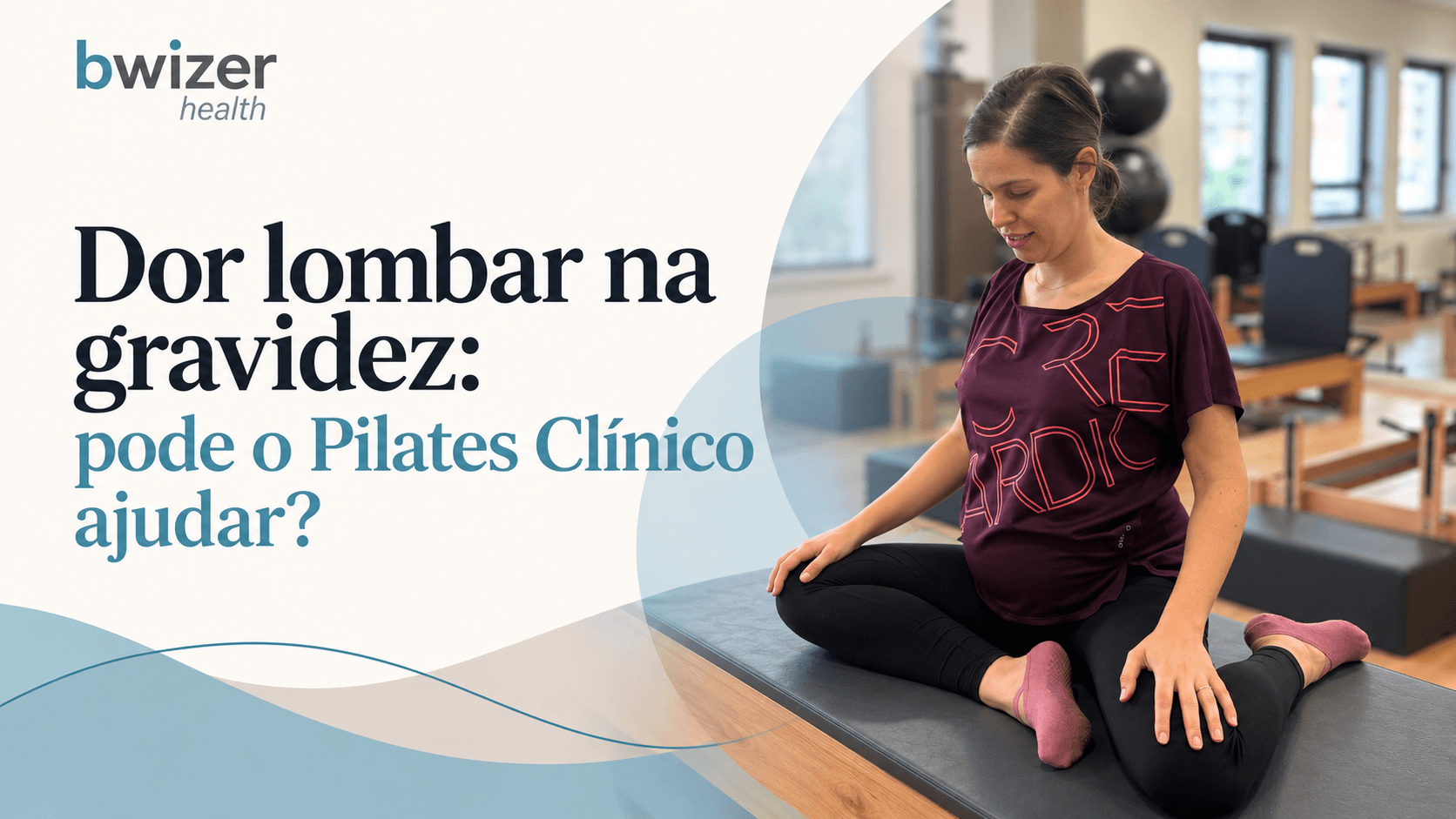
Clinical Pilates during pregnancy: is it safe? How can it help?

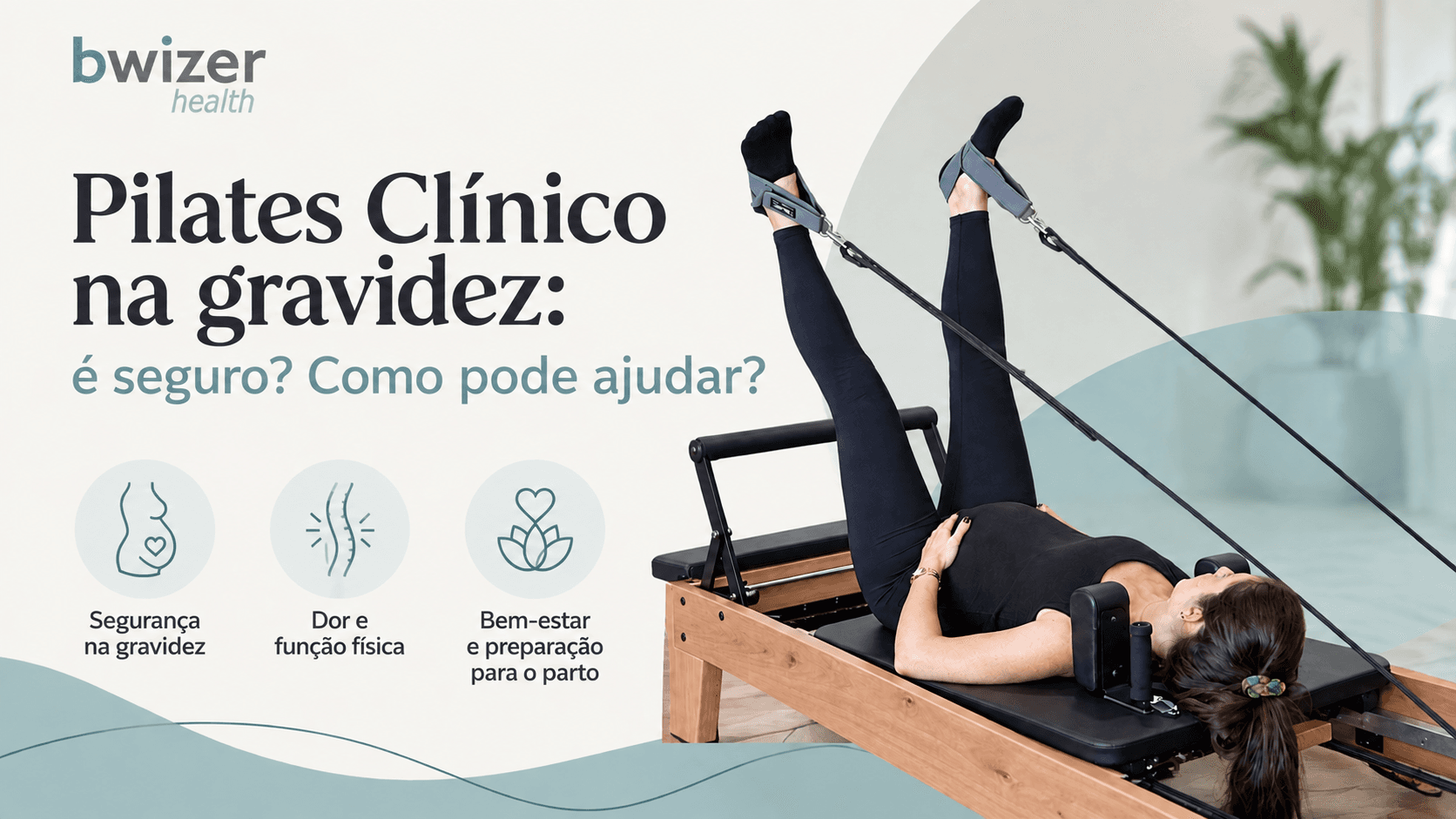
Clinical Pilates can be a safe option for women with low-risk pregnancies when appropriately adapted and supervised. Learn how it may help with pain, physical function, well-being and preparation for childbirth.
Short answer: Yes. For women with low-risk pregnancies and no contraindications to exercise, Clinical Pilates can be a safe option when it is appropriately adapted to pregnancy and properly supervised. Research suggests potential benefits particularly for pain, physical function and well-being.
Pregnancy is a period of profound change, during which a woman's body continuously adapts. Throughout this process, it is natural to look for safe ways to maintain physical and emotional well-being through exercise during pregnancy. Among these options, Clinical Pilates for pregnant women has attracted increasing interest. But what does the science tell us about its safety and effectiveness?
What is Clinical Pilates adapted to pregnancy?
Clinical Pilates is a form of clinical exercise integrated into Physiotherapy that considers both body and mind. It is based on principles such as concentration, control, precision, flow, breathing and activation of the “centre” or core.
When adapted to pregnancy, exercises are simplified and modified to take into account the hormonal and biomechanical changes occurring throughout pregnancy. A key focus is strengthening the deeper muscles of the trunk, including the transversus abdominis and pelvic floor, which contribute to stability of the spine and pelvis.
In practice, Clinical Pilates during pregnancy involves adapting exercises, positions, intensity and progression according to the stage of pregnancy and the individual characteristics of each woman.
Is it safe?
The available scientific evidence suggests that Clinical Pilates is a safe and feasible form of exercise for women with low-risk pregnancies when appropriately supervised.
Studies have not reported significant adverse effects for the mother or baby. Regarding newborn outcomes, Pilates does not appear to negatively affect birth weight or gestational age, suggesting that it is generally well tolerated.
Can Clinical Pilates help with pain and discomfort during pregnancy?
Low back pain and lumbopelvic pain are common during pregnancy. There is moderate-quality evidence suggesting that Clinical Pilates may help reduce the intensity of low back pain.
Other potential benefits include:
- Stability: it may help improve pelvic stability and reduce perceived physical disability.
- Pelvic floor: pelvic floor training during pregnancy can form part of an adapted exercise programme, and research has investigated its possible effects on urinary incontinence and abdominal diastasis.
What effect can it have on well-being, anxiety and sleep?
Regular exercise may also have a positive effect on emotional well-being and mental health.
- Anxiety and depression: Pilates has been identified among exercise modalities showing favourable results in reducing symptoms of perinatal depression and anxiety.
- Sleep: women practising Clinical Pilates may report better sleep quality, including fewer interruptions during the night.
Can Clinical Pilates influence labour and birth?
Research suggests that the breathing and muscular control involved in Pilates may be associated with positive differences in some outcomes related to preparation for childbirth.
- Duration of labour: some studies suggest that Pilates may help reduce the total duration of labour, particularly during the active phase.
- Obstetric outcomes: some evidence has associated Pilates with higher rates of vaginal birth, lower use of epidural analgesia and better newborn vitality scores, including first-minute APGAR scores.
How often should Clinical Pilates be practised during pregnancy?
The programmes most commonly studied generally follow a similar structure:
- Duration: interventions lasting 8 to 12 weeks.
- Frequency: 2 to 3 sessions per week.
- Session length: approximately 50 to 60 minutes.
- Programmes are frequently started during the second trimester, between approximately weeks 16 and 24 of pregnancy.
Before you start
If you have a high-risk pregnancy, an obstetric complication, new symptoms during exercise, or have been advised to limit physical activity, you should speak to the healthcare team supporting your pregnancy before starting or continuing exercise.
- Medical assessment: confirm with your doctor that there are no contraindications to exercise during pregnancy.
- Professional supervision: Clinical Pilates during pregnancy should be supervised by a specialised Physiotherapist to ensure that exercises are appropriately adapted to your individual situation.
In summary, Clinical Pilates may be a useful option for supporting greater comfort during pregnancy and preparation for childbirth, while promoting both physical and mental well-being.
At Bwizer Health, Clinical Pilates is supervised by Physiotherapists and adapted to the needs of each stage of pregnancy. Contact us to find out which approach may be most appropriate for you.
This article is for informational purposes only and does not replace an individual assessment by a healthcare professional.
References
Aktan, B., Kayıkçıoğlu, F., & Akbayrak, T. (2021). The comparison of the effects of clinical Pilates exercises with and without childbirth training on pregnancy and birth results. International Journal of Clinical Practice, 75(10), e14516. https://doi.org/10.1111/ijcp.14516
Baradwan, S., Khadawardi, K., Alayed, N. M., Akkour, K. M., Mahmoud, M. S., Abdelhakim, A. M., Sunoqrot, M., & Abdel Hamid, A. S. (2024). The effect of Pilates exercise during pregnancy on delivery outcomes: A systematic review and meta-analysis. Women & Health, 64(2), 131–141. https://doi.org/10.1080/03630242.2024.2304893
Ferraz, V. de S., Peixoto, C., Resstel, A. P. F., Paula, Y. T. C. de, & Pegorare, A. B. G. de S. (2023). Effect of the Pilates method on pain and quality of life in pregnancy: A systematic review and meta-analysis. Journal of Bodywork and Movement Therapies, 35, 220–227. https://doi.org/10.1016/j.jbmt.2023.04.076
Guo, L., Song, H., Suo, L., Yang, J., Lv, X., & Han, W. (2026). Optimal types and doses of exercise for improving sleep quality in perinatal women: A systematic review and network meta-analysis based on randomized controlled trials. BMC Pregnancy and Childbirth, 26(1), 168. https://doi.org/10.1186/s12884-026-08673-6
Haseli, A., Eghdampour, F., Zarei, H., Karimian, Z., & Rasoal, D. (2024). Optimizing labor duration with Pilates: Evidence from a systematic review and meta-analysis of randomized controlled trials. BMC Pregnancy and Childbirth, 24(1), 573. https://doi.org/10.1186/s12884-024-06785-5
Jiang, R., Shu, L., Li, Y., Wang, F., Pan, J., Xu, Y., Ye, X., Gao, N., & Huang, C. (2026). Effectiveness of exercise on perinatal depression and anxiety symptoms: A network meta-analysis and dose–response analysis. International Journal of Gynecology & Obstetrics, 173(3), 1308–1324. https://doi.org/10.1002/ijgo.70781
Li, Y., Lu, H., Zhang, L., Ren, Y., Dai, X., & Lin, L. (2025). Pilates exercise in pregnancy: A systematic review and meta-analysis. BMC Sports Science, Medicine and Rehabilitation, 17(1), 20. https://doi.org/10.1186/s13102-025-01067-9
Mérida-Téllez, J. M., Vázquez-Lara, J. M., Fernández-Carrasco, F. J., Gómez-Salgado, J., Macías-Toronjo, I., Muñoz-Vela, F. J., Fagundo-Rivera, J., Palomo-Gómez, R., & Rodríguez-Díaz, L. (2025). Effects of Pilates on the quality of life of pregnant women during pregnancy: A systematic review. Medicine, 104(17), e41967. https://doi.org/10.1097/MD.0000000000041967
Song, C., Shen, Y., Tang, X., Li, Z., Li, X., Zhang, X., Xiang, Y., Ma, J., Tian, X., Li, H., Li, F., & Li, H. (2026). Pilates during pregnancy for maternal musculoskeletal pain and discomfort: A systematic review and meta-analysis. BMJ Open, 16(5), e112441. https://doi.org/10.1136/bmjopen-2025-112441
Xie, J., Jin, M., & Wang, B. (2026). Optimizing exercise for perinatal depressive symptoms: A network meta-analysis of effective modalities and doses. Psychology of Sport and Exercise, 82, 102980. https://doi.org/10.1016/j.psychsport.2025.102980
Zaman, A. Y. (2023). Obstetric, maternal, and neonatal outcomes after Pilates exercise during pregnancy: A systematic review and meta-analysis. Medicine, 102(21), e33688. https://doi.org/10.1097/MD.0000000000033688