Lower back and pelvic pain during pregnancy: understanding, adapting and seeking help


Pain when walking, turning in bed or climbing stairs? Understand lower back and pelvic pain during pregnancy and how Pelvic Health Physiotherapy can help you adapt movement and return to activities that matter.
Getting up from a chair, turning in bed or climbing stairs can become harder when pain develops during pregnancy. These symptoms deserve attention, especially if they affect sleep, work or walking. Understanding what is difficult and how the pain changes helps you choose your next steps. A Pelvic Health Physiotherapy assessment can guide adaptations and an exercise plan suited to your situation.
When should you seek help for pain during pregnancy?
Pain may occur in the lower back or around the pelvis, with a different impact for each woman. Some experience temporary discomfort. Others need frequent stops when walking or struggle to find a comfortable sleeping position.
If pain limits activities that matter to you, seek a Pelvic Health Physiotherapy assessment. You can ask for support when symptoms recur, worsen or lead you to avoid movement. Examples of difficult tasks help the Physiotherapist understand your needs. The warning signs described later require medical assessment.
Are lower back pain and pelvic girdle pain the same thing?
Lower back pain is usually felt at the bottom of the back. Pelvic girdle pain may involve the back or front of the pelvis and occur during activities such as walking, climbing stairs or changing position. Both can occur together. The term "lumbopelvic pain" is used to group them.
Understanding pain involves considering where you feel it, how it started, which movements bring it on and whether other symptoms are present. This information helps guide a Pelvic Health Physiotherapy assessment.
Why can walking, turning in bed or climbing stairs hurt?
These tasks require the body to move and bear loads in different ways. During pregnancy, the way you walk and change position can change. Pain depends on each woman's situation, including previous symptoms, daily demands, fatigue and rest.
An explanation based only on a "misaligned pelvis" leaves questions about what makes movement difficult. During a Pelvic Health Physiotherapy assessment, observing the task and trying adaptations helps identify a more manageable way to do it. Changing the speed, range or demands of a movement and monitoring the response may help.
Understanding what pain means requires considering symptoms alongside the progress of your pregnancy and your general health. If a movement becomes difficult or causes symptoms that differ from your usual symptoms, describe that change at your appointment.
Should you rest or keep moving?
Adapted exercise may help reduce the intensity of lower back or pelvic pain during pregnancy. Activity should match what you can do and how your symptoms respond. You may need to shorten a walk, take breaks or temporarily change a task. Any obstetric advice to limit activity should be discussed with your maternity care team.
If a movement causes severe pain or a lasting increase in symptoms, stop that task and seek advice. To decide whether to stop or adapt exercise when you feel pain, your Physiotherapist can help review the demands and choose alternatives.
When organising physical activity during pregnancy across the week, consider your specific difficulties and the adaptations you need. The activities you choose should be adjusted to your response and how your pregnancy is progressing.
How can Pelvic Health Physiotherapy help?
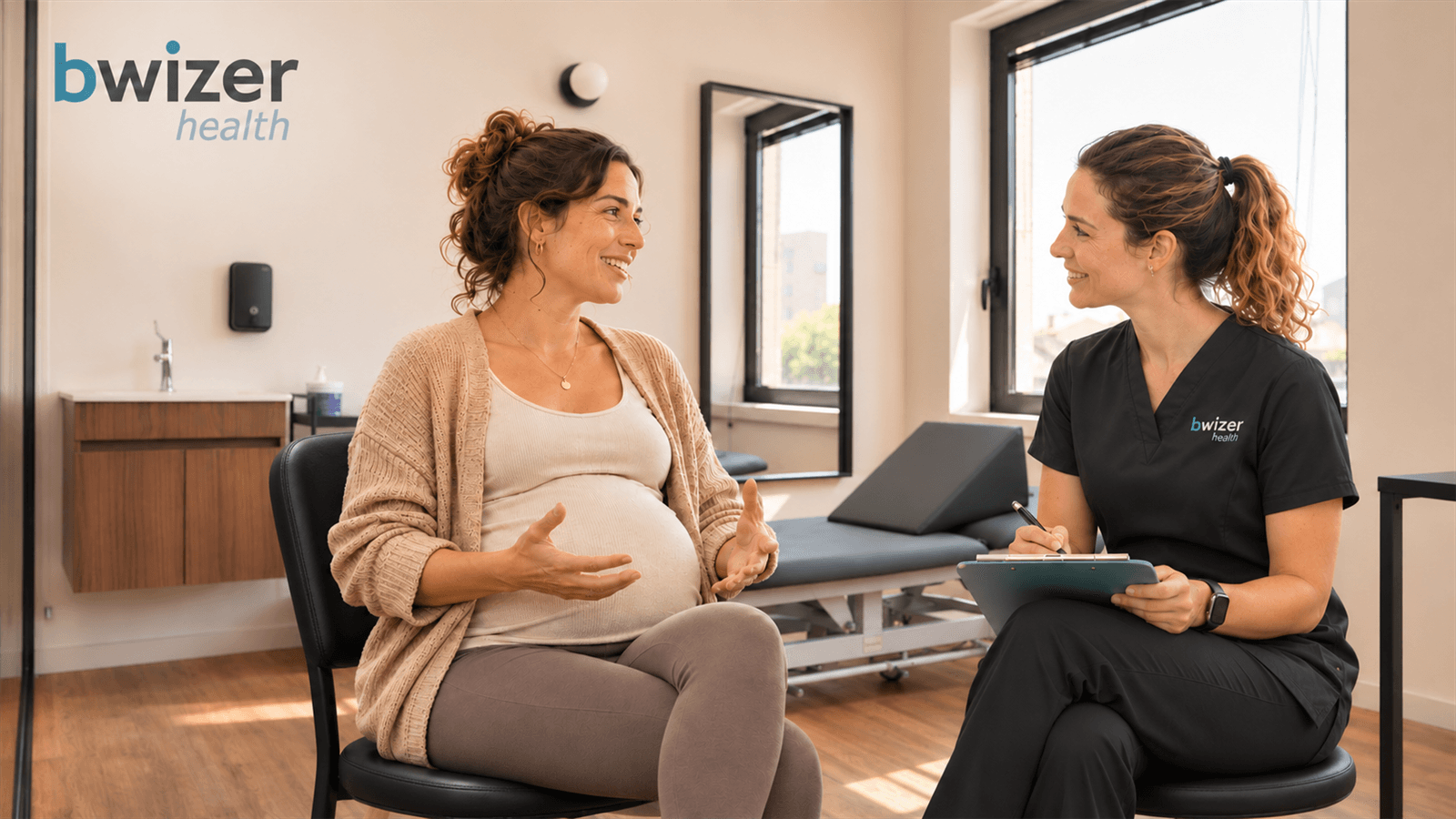
A Pelvic Health Physiotherapy assessment during pregnancy starts by exploring where it hurts, how long it has hurt, what makes symptoms better or worse and what you would like to do again. A Physiotherapist with pelvic health expertise also asks about the progress of your pregnancy, your maternity care and your usual activity. This conversation guides which movements and tasks to observe.
Your plan may combine adapted exercise, practising tasks and everyday strategies. If turning in bed or getting up is difficult, sessions may explore ways to do it more comfortably. Exercise duration, intensity and progression are reviewed according to your response. In some situations, support such as a lumbopelvic belt may be considered to make a task easier.
If symptoms suggest a need for other care, the Physiotherapist can guide medical referral. If you also have urine leakage or other pelvic symptoms, mention them at your appointment so they can be considered in the assessment.
Can Clinical Pilates be part of your care?
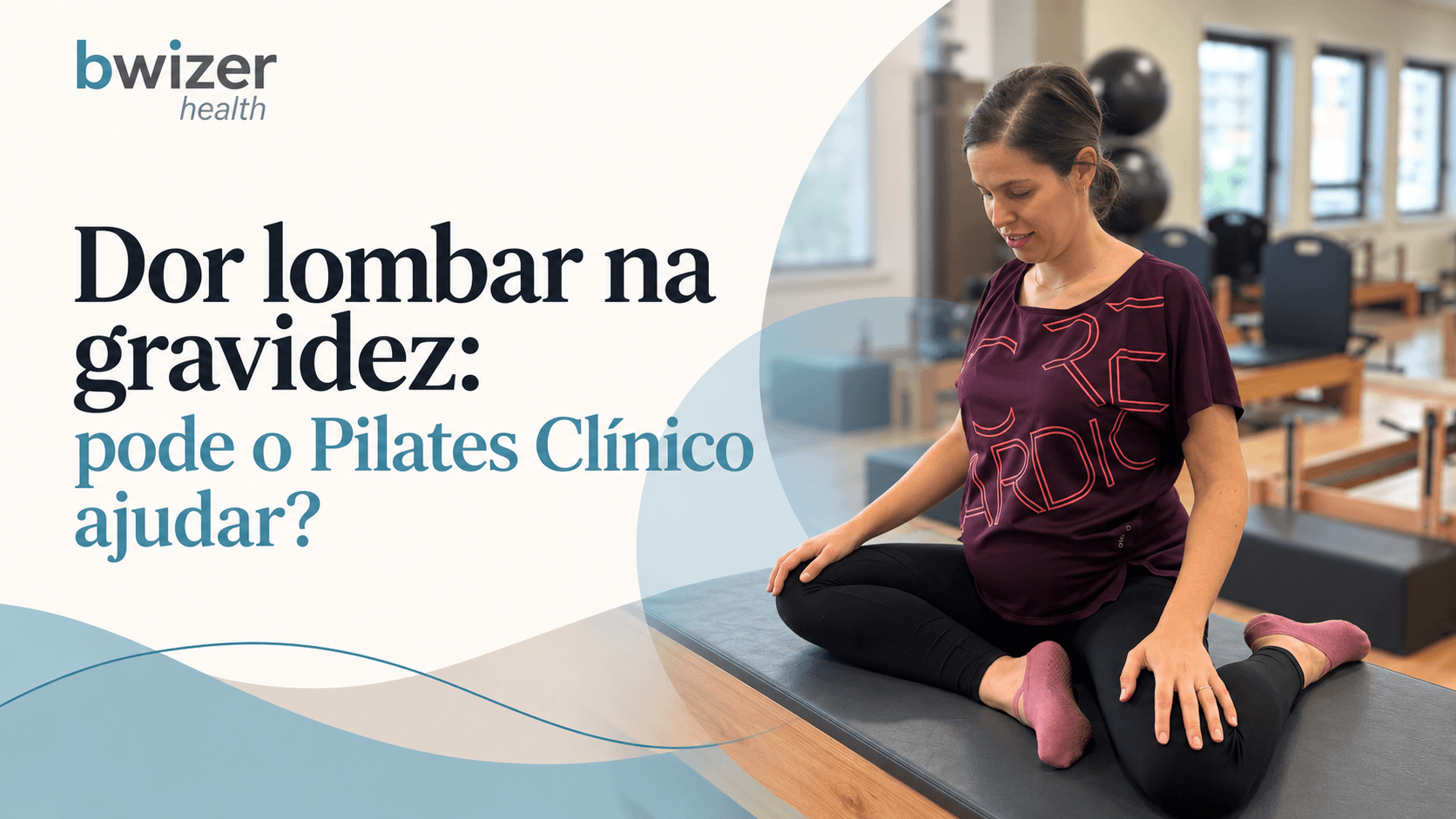
Clinical Pilates during pregnancy can be an exercise option when it suits your symptoms, the progress of your pregnancy and your preferences. Some studies found improvements in pain and difficulty carrying out activities. Results vary between programmes and women, so exercise choices and adaptations should start with a Pelvic Health Physiotherapy assessment.
If you do Clinical Pilates with lower back pain and a class leaves you with more pain or you struggle with the exercises, discuss the options with your Physiotherapist.
How to tell if you are improving
Track your pain and the activities you chose as goals. Can you walk for longer? Do you need fewer breaks on the stairs? Is turning in bed easier? Returning to activities that matter is part of improvement.
Your Physiotherapist can compare these tasks across appointments, alongside symptom frequency and intensity. If an activity remains difficult or new symptoms appear, the plan may need reviewing. Noting examples of better and worse days can help the discussion.
Can pain continue after birth?
Some women continue to experience lower back or pelvic pain after birth. If pain persists or continues to limit tasks, agree with your Physiotherapist how to seek support again. Progress varies and care should adapt to your needs during pregnancy and after birth.
When preparing for birth, tell your care team which positions or movements are difficult. This information can help adapt activities and plan ongoing care if pain continues after birth.
What you can prepare before your appointment
Choose an activity you want to maintain or return to. Ask yourself "What would I like to do more comfortably?". It might be walking to work or sleeping with fewer interruptions. You can gather some simple information before your Pelvic Health Physiotherapy assessment.
- Note when the pain started, where you feel it and which tasks bring it on.
- Describe what makes you stop, change position or ask for help.
- Bring guidance from your maternity care team, including any activity restrictions.
- Identify a goal that fits your routine and the questions you want to discuss.
When you should seek medical attention
New severe pain, progressive neurological symptoms or a marked deterioration in general health require medical assessment. Also stop exercising and seek care for vaginal bleeding, fluid leaking from the vagina, regular painful contractions, chest pain, shortness of breath before exertion, dizziness or fainting, a significant headache, or pain or swelling in one leg.
Seek immediate medical attention for potentially serious warning signs. If symptoms differ from your usual symptoms, contact your maternity care team to decide what to do before resuming activity.
Frequently asked questions
“Should I stop walking if it hurts?”
You may need to shorten the walk, take breaks or temporarily stop. The decision depends on the intensity and progression of symptoms and your clinical situation. If pain persists, worsens or limits daily life, seek a Pelvic Health Physiotherapy assessment. Warning signs require medical assessment.
“Can I do Clinical Pilates with lower back pain?”
It may be an option if the exercises suit your situation. A Pelvic Health Physiotherapy assessment helps establish whether a supervised class meets your needs or whether individual support would be a better starting point.
“Do I need to be pain-free before exercising again?”
In some situations, adapted exercise is part of care even when discomfort is present. Agree with your Physiotherapist what to try and how to recognise worsening symptoms. Severe pain, new symptoms or an obstetric complication warrant reviewing the decision.
“When should I book a Pelvic Health Physiotherapy assessment?”
When pain affects walking, sleeping, work or other activities that matter, or if you are unsure how to adapt movement. Bring examples of your difficulties and what you would like to get back to doing.
How can Bwizer Health help?
If lower back or pelvic pain is making daily life harder, you can discuss a Pelvic Health Physiotherapy assessment with the team. Describing a specific task you would like to do again helps establish a starting point and discuss care options.
Book a Pelvic Health Physiotherapy appointment at Bwizer Health to discuss your difficulties and the next steps.
This article is for information only and does not replace an individual Pelvic Health Physiotherapy or medical assessment, depending on your symptoms.
References
American College of Obstetricians and Gynecologists. (2020). Physical activity and exercise during pregnancy and the postpartum period: ACOG Committee Opinion, Number 804. Obstetrics & Gynecology, 135(4), e178–e188. https://doi.org/10.1097/AOG.0000000000003772
Buin, L., Joaquim, R. H. V. T., Strong, J., & Robinson, K. (2024). The experience of pregnancy-related lumbopelvic pain: A qualitative evidence synthesis. Canadian Journal of Occupational Therapy, 91(1), 29–43.
Burani, E., Marruganti, S., Giglioni, G., Bonetti, F., Ceron, D., & Cozzi Lepri, A. (2023). Predictive factors for pregnancy-related persistent pelvic girdle pain (PPGP): A systematic review. Medicina, 59(12), Article 2123. https://doi.org/10.3390/medicina59122123
Bwizer Health. (2026). Relatório de investigação clínica – Pré-Parto [Relatório interno].
Liddle, S. D., & Pennick, V. (2015). Interventions for preventing and treating low-back and pelvic pain during pregnancy. Cochrane Database of Systematic Reviews, 2015(9), Article CD001139. https://doi.org/10.1002/14651858.CD001139.pub4
Morino, S., Ishihara, M., Umezaki, F., Hatanaka, H., Yamashita, M., & Aoyama, T. (2024). History of pain around the lumbopelvic region during perinatal period: A prospective cohort study. European Spine Journal, 33, 1440–1446.
Mottola, M. F., Davenport, M. H., Ruchat, S.-M., Davies, G. A., Poitras, V. J., Gray, C. E., Jaramillo Garcia, A., Barrowman, N., Adamo, K. B., Duggan, M., Barakat, R., Chilibeck, P., Fleming, K., Forte, M., Korolnek, J., Nagpal, T., Slater, L. G., Stirling, D., & Zehr, L. (2018). 2019 Canadian guideline for physical activity throughout pregnancy. British Journal of Sports Medicine, 52(21), 1339–1346. https://doi.org/10.1136/bjsports-2018-100056
National Institute for Health and Care Excellence. (2021). Antenatal care (NICE Guideline NG201). https://www.nice.org.uk/guidance/ng201/chapter/recommendations
Remus, A., DeJong Lempke, A. F., Wuytack, F., & Smith, V. (2022). Outcome measurement instruments and evidence-based recommendations for measurement of the pelvic girdle pain core outcome set (PGP-COS): A systematic review and consensus process. The Journal of Pain, 23(12), 2052–2069. https://doi.org/10.1016/j.jpain.2022.08.003
Shiri, R., Coggon, D., & Falah-Hassani, K. (2018). Exercise for the prevention of low back and pelvic girdle pain in pregnancy: A meta-analysis of randomized controlled trials. European Journal of Pain, 22(1), 19–27. https://doi.org/10.1002/ejp.1096
Sonmezer, E., Özköslü, M. A., & Yosmaoğlu, H. B. (2021). The effects of clinical Pilates exercises on functional disability, pain, quality of life and lumbopelvic stabilization in pregnant women with low back pain: A randomized controlled study. Journal of Back and Musculoskeletal Rehabilitation, 34(1), 69–76. https://doi.org/10.3233/BMR-191810