How to stay active safely and confidently during pregnancy

How can you stay active during pregnancy? Explore the exercise recommendations, learn how to combine walking and Clinical Pilates, and discover how a physiotherapist can help adapt activity to your needs.
Pregnancy brings changes to your body and routine. It is natural to wonder: can I keep going for walks? Do I have to stop strength training at the gym? What if I have never exercised before? In many pregnancies, continuing or starting physical activity is not only possible but beneficial. The right choice depends on your health, previous experience and the activity involved. Understanding the recommendations and knowing when to adapt your exercise can help you stay active with greater confidence.
Why is it worth exercising during pregnancy?
Exercising during pregnancy can help you maintain your ability to carry out everyday activities and support your cardiovascular health. Scientific recommendations on exercise during pregnancy also recognise benefits such as a reduced risk of gestational diabetes and excessive weight gain in women without medical contraindications.
150 minutes a week is enough
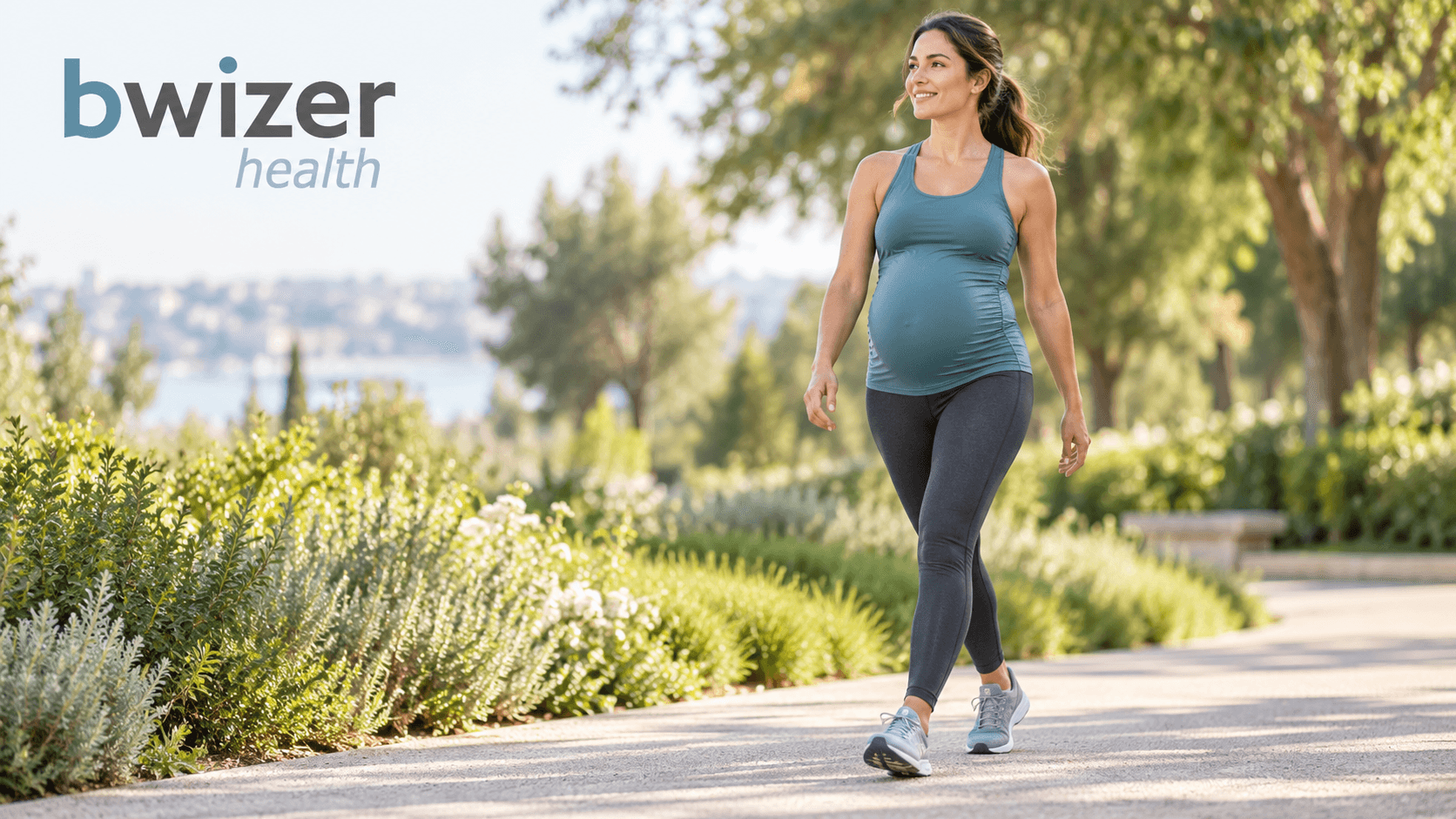
The World Health Organization, the American College of Obstetricians and Gynecologists (ACOG) and the Canadian guidelines support regular physical activity during pregnancy when there are no contraindications. The reference recommendation is to accumulate at least 150 minutes of moderate-intensity aerobic activity each week, such as walking at a pace that makes you breathe faster while still allowing you to talk. The Canadian guideline recommends spreading this activity over at least three days and encourages daily movement. Strength training is also part of a balanced programme and complements aerobic activity.
The 150 minutes therefore refer to the aerobic component of your weekly activity, rather than the total time spent doing any type of exercise. Walking can help you work towards this recommendation, while other sessions focus on strength, mobility or movement control. If you are starting out, you can begin with shorter periods and increase gradually. Doing less than the recommended amount is still worthwhile. A physiotherapist - a healthcare professional specialising in physical exercise - can help you adapt this combination to your needs, goals and how you feel.
How do I know if I am exercising at moderate intensity?
The “talk test” is a simple guide: during a walk, for example, you breathe faster than at rest, but you can still hold a conversation. If talking becomes difficult, you may need to reduce your effort. This test helps you judge intensity; it does not, on its own, confirm that an activity is safe if you have symptoms or complications.
Your perceived level of effort can also help you adjust your training. Heart rate can provide additional information, but there is no single beats-per-minute limit that suits every pregnant woman. Training experience, fitness, medication and your clinical situation all influence your response.
Can I start exercising during pregnancy?
Yes, when your doctor has not identified any contraindications. You do not need to have exercised before becoming pregnant, but you should start gradually. If you spend many hours sitting, a short, comfortable walk can be a good starting point. Before starting a programme, discuss physical activity at your antenatal appointments, particularly if you have a complication or concerns about your health.
Choose something you enjoy and can fit into your routine. You can first increase the duration or the number of days, without changing everything at once. Pay attention to how you feel during and after the activity.
If you already exercised, you may be able to continue familiar activities with the necessary adaptations. If you did vigorous training or competitive sport, you may need specific advice on adjusting training load, recovery and the risks associated with your sport. Previous experience does not remove the need to monitor how your pregnancy progresses.
What type of exercise can I do during pregnancy?
Walking is an accessible way to accumulate aerobic activity. Strength training can include bodyweight exercises or resistance adapted to your experience, symptoms and goals. It does not necessarily mean lifting heavy weights.
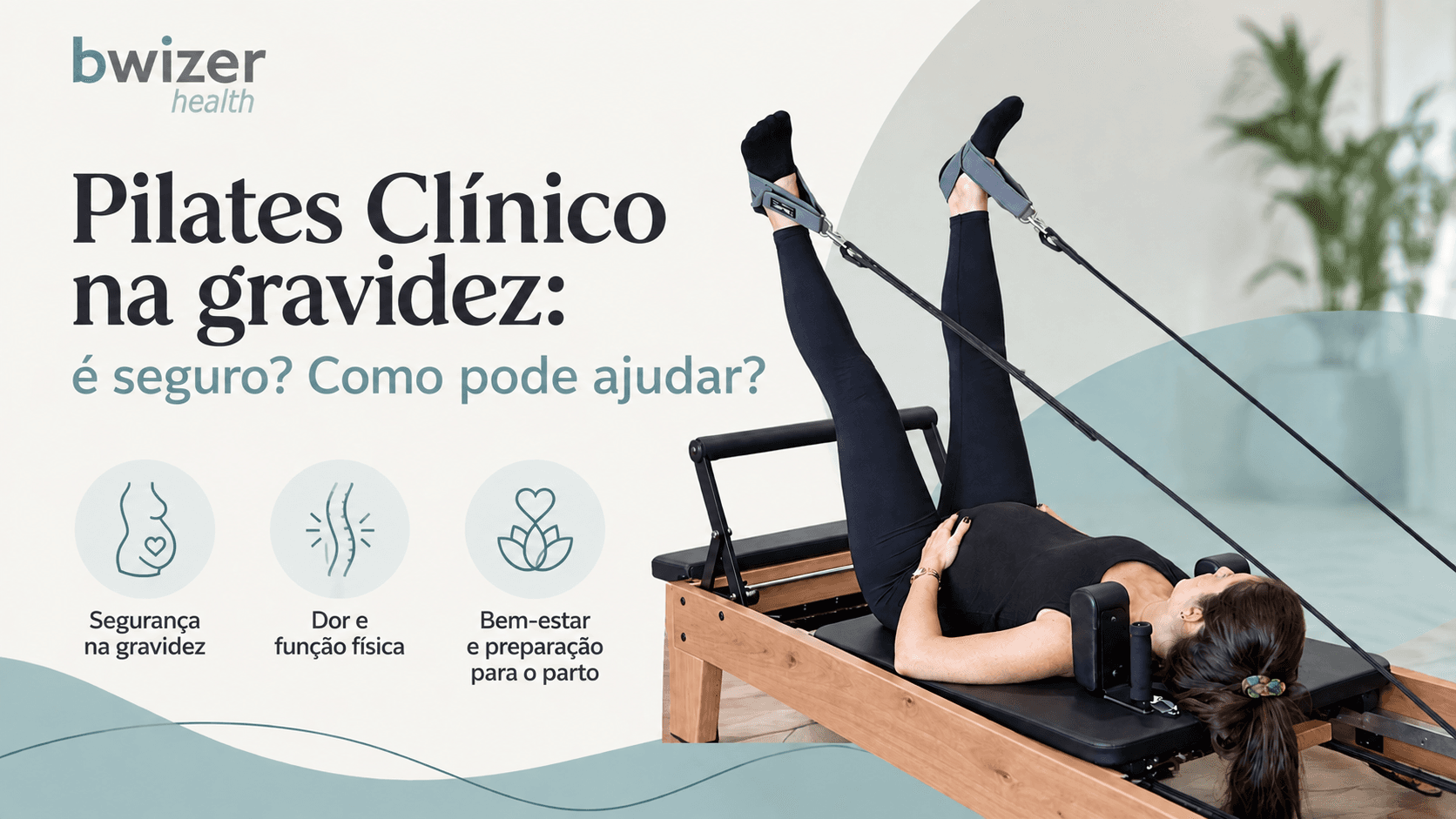
Clinical Pilates during pregnancy can work on strength, movement control, mobility and breathing, depending on the programme. These components have a place in an exercise plan, even when the class does not involve moderate-intensity aerobic activity. This is why Clinical Pilates sessions and walking can complement each other throughout the week. Your physiotherapist can adapt the exercises and help you understand how to combine supervised sessions with activities you do on your own.
Clinical Pilates and pelvic floor muscle training should not be assumed to be equivalent. Pelvic floor training requires specific guidance, including learning how to contract and relax the muscles. If you have urine leakage or other pelvic symptoms, a pelvic health physiotherapy assessment can help you find appropriate support.
When should I stop exercising and seek medical help?
Safety needs to be monitored throughout pregnancy. An initial assessment showing no complications does not remove the need to pay attention to new symptoms. Stop the activity and seek medical assessment if you experience:
- Vaginal bleeding or fluid leaking from the vagina.
- Regular, painful contractions.
- Chest pain or shortness of breath before starting exercise.
- Dizziness, feeling faint or fainting.
- A significant headache.
- Pain or swelling in one leg.
New, very severe pain, progressive neurological changes or a marked deterioration in your general health also require assessment. If you experience potentially serious warning signs, seek immediate medical attention.
If you have an obstetric complication or a medical condition that could affect exercise, the team caring for you during pregnancy should guide your participation. A contraindication to a particular type of training does not automatically mean that you need complete bed rest.
What precautions should I take with positions and activities?
Lying on your back is a common concern. ACOG recommends avoiding long periods in this position after around 20 weeks; the Canadian guideline places particular emphasis on changing position if you feel dizzy, nauseous or unwell. Briefly lying in this position should not be described as dangerous in every situation. Duration, symptoms and individual guidance matter.
Activities with a high risk of falling or injury, scuba diving and excessive heat exposure should be avoided. Drink water, choose comfortable clothing and adapt your exercise environment. Precautions may change as your pregnancy progresses and depending on the activity.
How can I adapt exercise on days when I feel more tired?
Fatigue, nausea, poor sleep or a demanding day at work can make your usual session more difficult. It may be appropriate to shorten it, reduce the intensity, choose another activity or rest. Adjusting your plan is part of maintaining a manageable routine.
If you feel pain during an exercise, stop that movement and observe how you respond. You may need to change position, reduce the load or seek assessment, particularly if the pain persists, worsens or limits everyday activities. Warning signs require the action described above.
A simple record of your activity days, duration, perceived effort and any symptoms can help when talking to the professional supporting you. It is not a safety test or an obligation to complete sessions. A break taken on clinical advice does not indicate a lack of motivation.
How can a physiotherapist help me stay active during pregnancy?
A physiotherapist can help you start or maintain physical activity during pregnancy, even when you have no symptoms. Taking account of what you already do, what you would like to achieve and how your pregnancy is progressing, they can help you choose exercises, adjust duration and intensity, and progress according to your response. If you have lower back or pelvic pain, urine leakage or difficulty with everyday tasks, an assessment can also help clarify these symptoms and guide care.
In practice, support may include adapting an exercise that causes discomfort, guiding strength or pelvic floor training, and reviewing the plan as your needs change. It also includes helping you understand what you can do independently and when you should seek medical assessment. If you are looking for supervised prenatal exercise, physiotherapy can help.
Frequently asked questions about exercise during pregnancy
Do I have to wait until the second trimester to start?
There is no general rule requiring every woman to wait. When to start depends on how your pregnancy is progressing, any contraindications and the proposed activity. If you have a complication or a clinical concern, seek advice before starting.
Does a short walk count?
Yes. Even short periods of activity are worthwhile. Intensity also matters when contributing towards the recommendation for moderate-intensity aerobic activity. You can build your routine gradually, according to what you can tolerate.
How can I combine Clinical Pilates with my weekly physical activity?
Walking at moderate intensity can contribute towards the 150 minutes of aerobic activity. Clinical Pilates sessions can address other areas that walking may work on less intensively: strength, mobility and movement control.
Your physiotherapist can help you organise these activities into a plan that fits your routine.
Can I exercise at home?
Yes, some activities can be done independently when they are appropriate for your situation. Generic videos do not assess your health or adapt exercises to each person. Professional support may be particularly useful if you have symptoms, concerns or a more complex clinical situation.
What support can I find at Bwizer Health?
At Bwizer Health, Clinical Pilates is one of the supervised exercise options available. If you would like to stay active during pregnancy, you can talk to the team about what you already do, your questions and your goals. A physiotherapy assessment can help identify the adaptations you need and guide your care, whether to support physical activity or address pain, urine leakage or other symptoms.
Staying active can take many forms. Support should help you choose activities that make sense for you and review your plan as your needs change.
Would you like to understand which exercise suits your pregnancy? Book an appointment at Bwizer Health to discuss your needs and the available support options with the team.
This article is for information only and does not replace an obstetric or physiotherapy assessment. If warning signs occur, stop the activity and seek medical attention.
References
American College of Obstetricians and Gynecologists. (2020). Physical activity and exercise during pregnancy and the postpartum period: ACOG Committee Opinion, Number 804. Obstetrics & Gynecology, 135(4), e178–e188. https://doi.org/10.1097/AOG.0000000000003772
de Castro, R., Antunes, R., Mendes, D., Szumilewicz, A., & Santos-Rocha, R. (2022). Can group exercise programs improve health outcomes in pregnant women? An updated systematic review. International Journal of Environmental Research and Public Health, 19(8), Article 4875. https://doi.org/10.3390/ijerph19084875
Dias, N. T., Ferreira, L. R., Fernandes, M. G., Resende, A. P. M., & Pereira-Baldon, V. S. (2018). A Pilates exercise program with pelvic floor muscle contraction: Is it effective for pregnant women? A randomized controlled trial. Neurourology and Urodynamics, 37(1), 379–384. https://doi.org/10.1002/nau.23308
Hayman, M., Brown, W. J., Brinson, A., Budzynski-Seymour, E., Bruce, T., & Evenson, K. R. (2023). Public health guidelines for physical activity during pregnancy from around the world: A scoping review. British Journal of Sports Medicine, 57(14), 940–947. https://doi.org/10.1136/bjsports-2022-105777
Liddle, S. D., & Pennick, V. (2015). Interventions for preventing and treating low-back and pelvic pain during pregnancy. Cochrane Database of Systematic Reviews, 2015(9), Article CD001139. https://doi.org/10.1002/14651858.CD001139.pub4
Mottola, M. F., Davenport, M. H., Ruchat, S.-M., Davies, G. A., Poitras, V. J., Gray, C. E., Jaramillo Garcia, A., Barrowman, N., Adamo, K. B., Duggan, M., Barakat, R., Chilibeck, P., Fleming, K., Forte, M., Korolnek, J., Nagpal, T., Slater, L. G., Stirling, D., & Zehr, L. (2018). 2019 Canadian guideline for physical activity throughout pregnancy. British Journal of Sports Medicine, 52(21), 1339–1346. https://doi.org/10.1136/bjsports-2018-100056
National Institute for Health and Care Excellence. (2021). Pelvic floor dysfunction: Prevention and non-surgical management (NICE Guideline NG210). https://www.nice.org.uk/guidance/ng210
Ribeiro, M. M., Andrade, A., & Nunes, I. (2022). Physical exercise in pregnancy: Benefits, risks and prescription. Journal of Perinatal Medicine, 50(1), 4–17. https://doi.org/10.1515/jpm-2021-0315
Sonmezer, E., Özköslü, M. A., & Yosmaoğlu, H. B. (2021). The effects of clinical Pilates exercises on functional disability, pain, quality of life and lumbopelvic stabilization in pregnant women with low back pain: A randomized controlled study. Journal of Back and Musculoskeletal Rehabilitation, 34(1), 69–76. https://doi.org/10.3233/BMR-191810
Wieloch, N., Klostermann, A., Kimmich, N., Spörri, J., & Scherr, J. (2022). Sport and exercise recommendations for pregnant athletes: A systematic scoping review. BMJ Open Sport & Exercise Medicine, 8(4), Article e001395. https://doi.org/10.1136/bmjsem-2022-001395
Woodley, S. J., Lawrenson, P., Boyle, R., Cody, J. D., Mørkved, S., Kernohan, A., & Hay-Smith, E. J. C. (2020). Pelvic floor muscle training for preventing and treating urinary and faecal incontinence in antenatal and postnatal women. Cochrane Database of Systematic Reviews, 2020(5), Article CD007471. https://doi.org/10.1002/14651858.CD007471.pub4
World Health Organization. (2020). WHO guidelines on physical activity and sedentary behaviour: At a glance. https://www.who.int/publications/i/item/9789240014886
Yang, X., Li, H., Zhao, Q., Han, R., Xiang, Z., & Gao, L. (2022). Clinical practice guidelines that address physical activity and exercise during pregnancy: A systematic review. Journal of Midwifery & Women’s Health, 67(1), 53–68. https://doi.org/10.1111/jmwh.13286