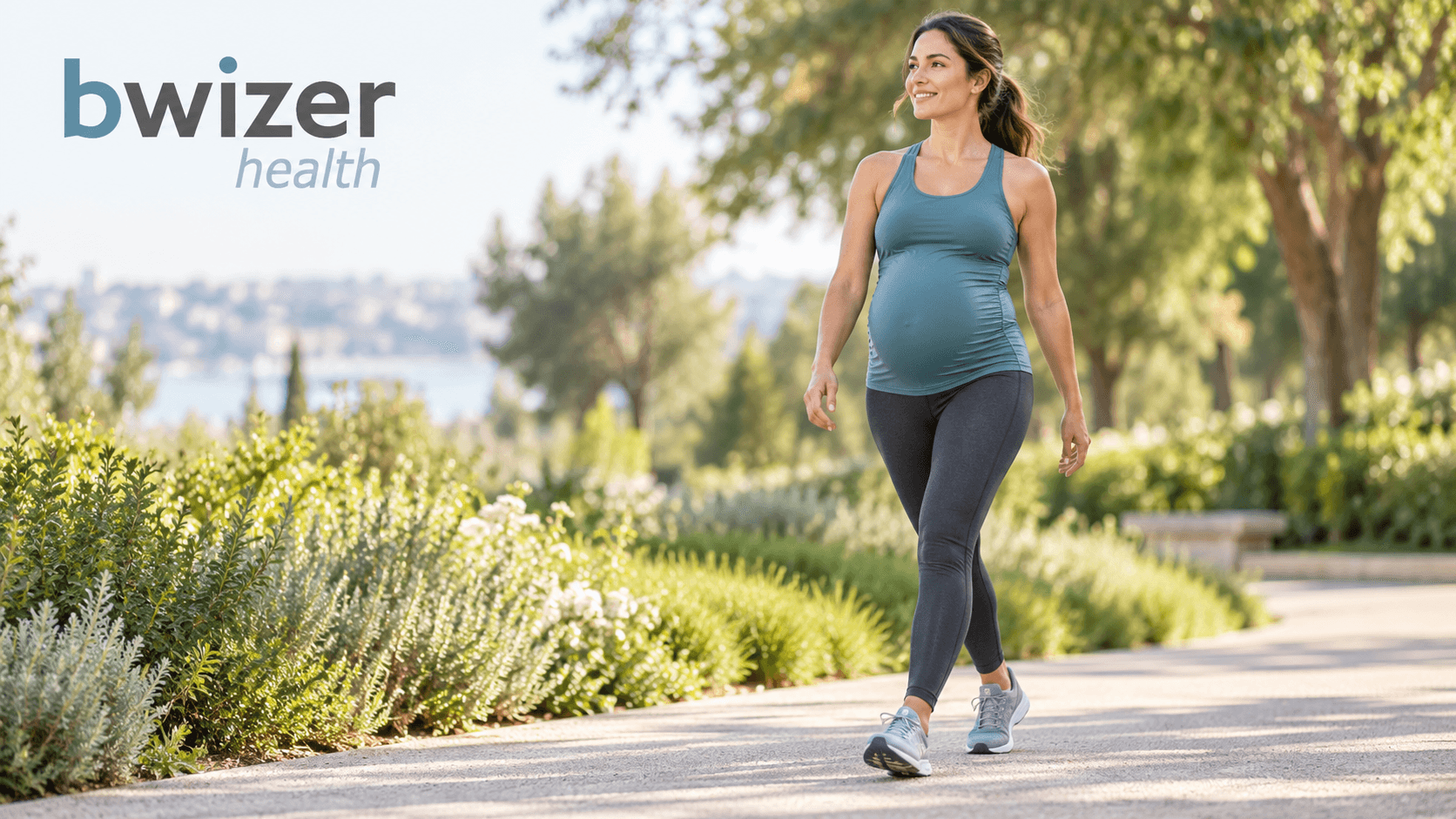
Can you keep running and training during pregnancy?


Scientific Director
Physiotherapist no. 1054 · Ordem dos Fisioterapeutas
Last reviewed:

Can you keep running and strength training during pregnancy? Find out what you can adjust and how a Pelvic Health Physiotherapist can help you decide what works for you.
If you ran or did strength training before becoming pregnant, you can often carry on in an uncomplicated pregnancy, adapting your routine as needed. What makes sense depends on how your pregnancy is progressing, what you were doing before and how you recover after each session.
If you are unsure about starting or continuing to run,a Pelvic Health Physiotherapist can help you decide how to move forward. If you have been advised to limit exercise, follow your maternity care team’s guidance.
Can you keep running?
If you already run, notice how you feel during and after each run. If discomfort lingers and makes walking or climbing stairs harder, try slowing down or shortening the run. If lower back or pelvic pain during pregnancy persists or gets in the way of daily activities, seek an assessment.
If discomfort mainly comes on during hills or faster efforts, try a flatter route or a steadier pace. See whether the change makes running more comfortable and how you feel later that day.
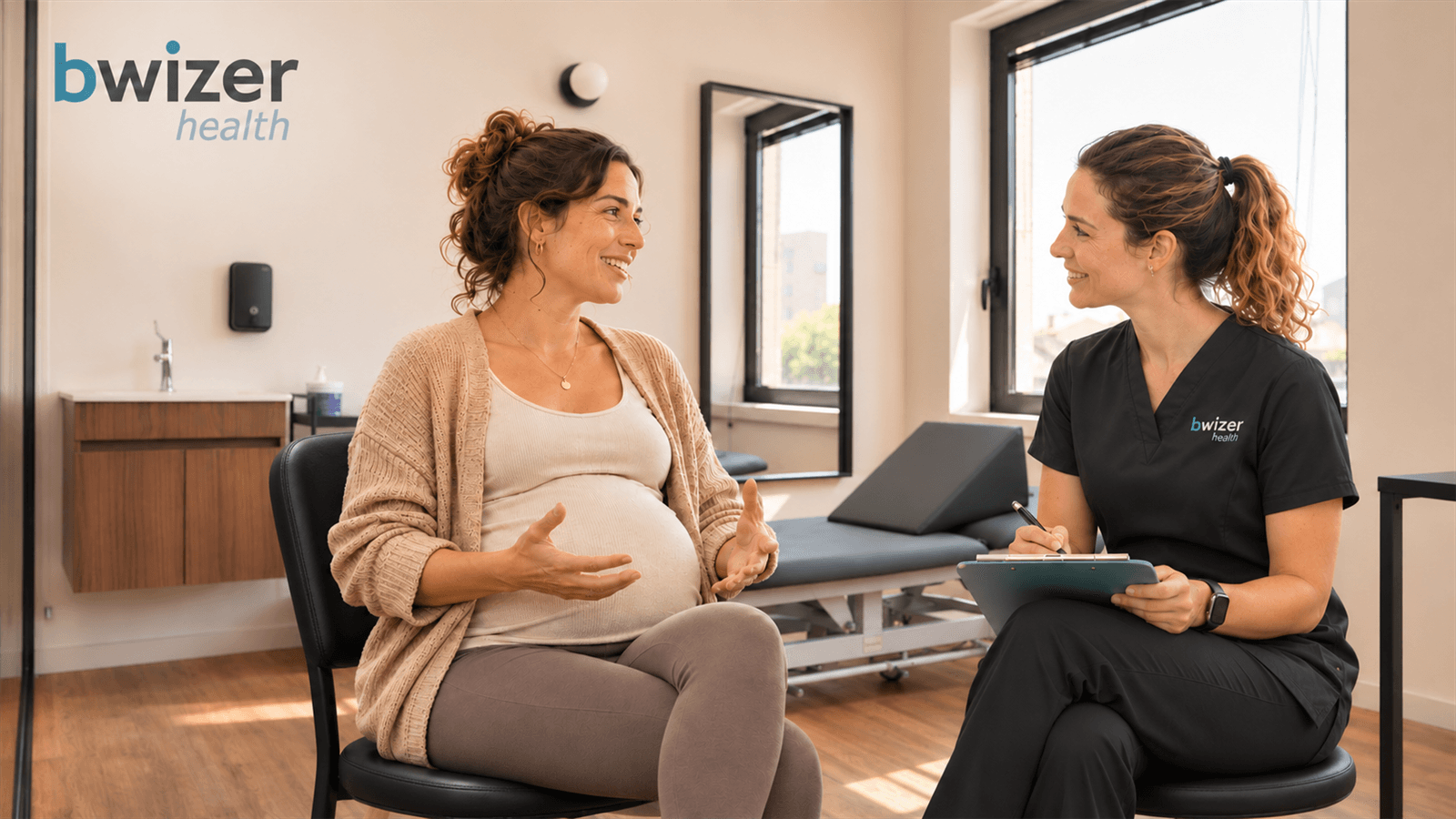
At a Pelvic Health Physiotherapy appointment, you can talk about your routine, any symptoms and what you would like to be able to do. The assessment can help you choose what to adjust first or find a starting point if you have never run before.
Can you keep doing strength training?
If you already did strength training and your pregnancy is uncomplicated, you can often keep the exercises you still find comfortable. If an exercise feels harder, try using a lighter weight, doing fewer repetitions or adjusting the movement.
If discomfort only starts towards the end of a workout, it may help to shorten the session or spread the exercises across more days. See whether the change helps you recover.
Even if you train with a personal trainer, a Pelvic Health Physiotherapy appointment can help you work out which exercises bring on pain or urine leakage and which changes are worth trying. With your consent, your Physiotherapist can share that guidance with your personal trainer, who can adapt your sessions. Both professionals can review the plan as your pregnancy progresses.
What should you pay attention to after training?
For a few days, note what you did, whether anything felt uncomfortable and how you felt before your next session. If you are still tired or sore when the next session comes around, consider changing your pace or how long or often you train. If you train a lot, discuss rest and nutrition with your maternity care team.
If you leak urine when you run, jump or lift weights, an assessment can help you understand when it happens and how to adapt your exercise. Your Physiotherapist can also assess whether pelvic floor exercises would be appropriate.
How do you decide whether to keep training at the same intensity?
Use your usual level of effort as a guide. If running at the same pace or doing the same class feels harder, try slowing down or shortening the session. The pregnancy exercise guidelines explain how aerobic activity and strength training can fit into your routine.
Notice how you are breathing, whether you can talk and how you feel during exercise. A watch can tell you your heart rate. When deciding whether to slow down, consider how hard the session feels and how you recover. If you plan to compete or keep doing very intense sessions, speak to your maternity care team.
If your sport carries a high risk of falling, collision or abdominal injury, consider ways to maintain fitness with less exposure to those risks. Avoid scuba diving and exercising in excessive heat.
When should you stop exercising and seek help?
Stop exercising and seek medical assessment if you experience vaginal bleeding, fluid leakage, regular painful contractions, chest pain, breathlessness before exercise, dizziness, fainting, a severe headache, or pain or swelling in one leg. If you have been advised to limit exercise or develop a pregnancy complication, check with your maternity care team about how to adapt your plan.
Frequently asked questions
Can you take up running during pregnancy if you have never run before?
If you are unsure about taking up running, speak to a Pelvic Health Physiotherapist. An assessment can help you choose a starting activity and work out how to build up gradually, taking into account your experience and your maternity care team's advice.
Do you need to stop running if you leak urine?
Urine leakage is a reason to seek an assessment. Knowing when it happens, for example on every run or only when you speed up, helps your Physiotherapist work out which adjustments to try and whether to assess your pelvic floor.
Is there a point in pregnancy when you need to stop strength training?
The week of pregnancy alone does not tell you when to stop. How your pregnancy is progressing and how well you tolerate each exercise help guide what to keep or adapt. Follow any advice from your maternity care team to limit exercise.
How can Bwizer Health help?
At Bwizer Health, prenatal physiotherapy can help you understand what is making running or training harder and find ways to keep doing the activities that matter to you.
Book your Pelvic Health Physiotherapy appointment.
References
American College of Obstetricians and Gynecologists. (2020). Physical activity and exercise during pregnancy and the postpartum period (Committee Opinion No. 804). Obstetrics & Gynecology, 135(4), e178–e188. https://doi.org/10.1097/AOG.0000000000003772
Claiborne, A., Jevtovic, F., & May, L. E. (2023). A narrative review of exercise dose during pregnancy. Birth Defects Research, 115, 1581–1597. https://doi.org/10.1002/bdr2.2249
Davenport, M. H., Marchand, A. A., Mottola, M. F., et al. (2019). Exercise for the prevention and treatment of low back, pelvic girdle and lumbopelvic pain during pregnancy: A systematic review and meta-analysis. British Journal of Sports Medicine, 53, 90–98. https://doi.org/10.1136/bjsports-2018-099400
Meah, V. L., Davies, G. A., & Davenport, M. H. (2020). Why can’t I exercise during pregnancy? Time to revisit medical “absolute” and “relative” contraindications: Systematic review of evidence of harm and a call to action. British Journal of Sports Medicine, 54, 1395–1404.
Mottola, M. F., Davenport, M. H., Ruchat, S. M., et al. (2018). 2019 Canadian guideline for physical activity throughout pregnancy. British Journal of Sports Medicine, 52, 1339–1346. https://doi.org/10.1136/bjsports-2018-100056
Wieloch, N., Klostermann, A., Kimmich, N., Spörri, J., & Scherr, J. (2022). Sport and exercise recommendations for pregnant athletes: A systematic scoping review. BMJ Open Sport & Exercise Medicine, 8, e001395. https://doi.org/10.1136/bmjsem-2022-001395
Woodley, S. J., Lawrenson, P., Boyle, R., et al. (2020). Pelvic floor muscle training for preventing and treating urinary and faecal incontinence in antenatal and postnatal women. Cochrane Database of Systematic Reviews, (5), CD007471. https://doi.org/10.1002/14651858.CD007471.pub4
World Health Organization. (2020). WHO guidelines on physical activity and sedentary behaviour: At a glance.