Swollen legs at the end of the day: how can physiotherapy help?

Leg swelling can develop after long periods of sitting or standing. Learn how physiotherapy, movement and suitable compression strategies may help prevent fluid build-up and ease discomfort.
Do you spend many hours standing or sitting and notice that your legs feel heavy or swollen by the end of the day? Discover why this happens and how physiotherapy can help manage the discomfort.
Why do legs become swollen?
Peripheral oedema is an excessive build-up of fluid in the tissues, causing swelling that is often noticeable in the feet, ankles and legs.
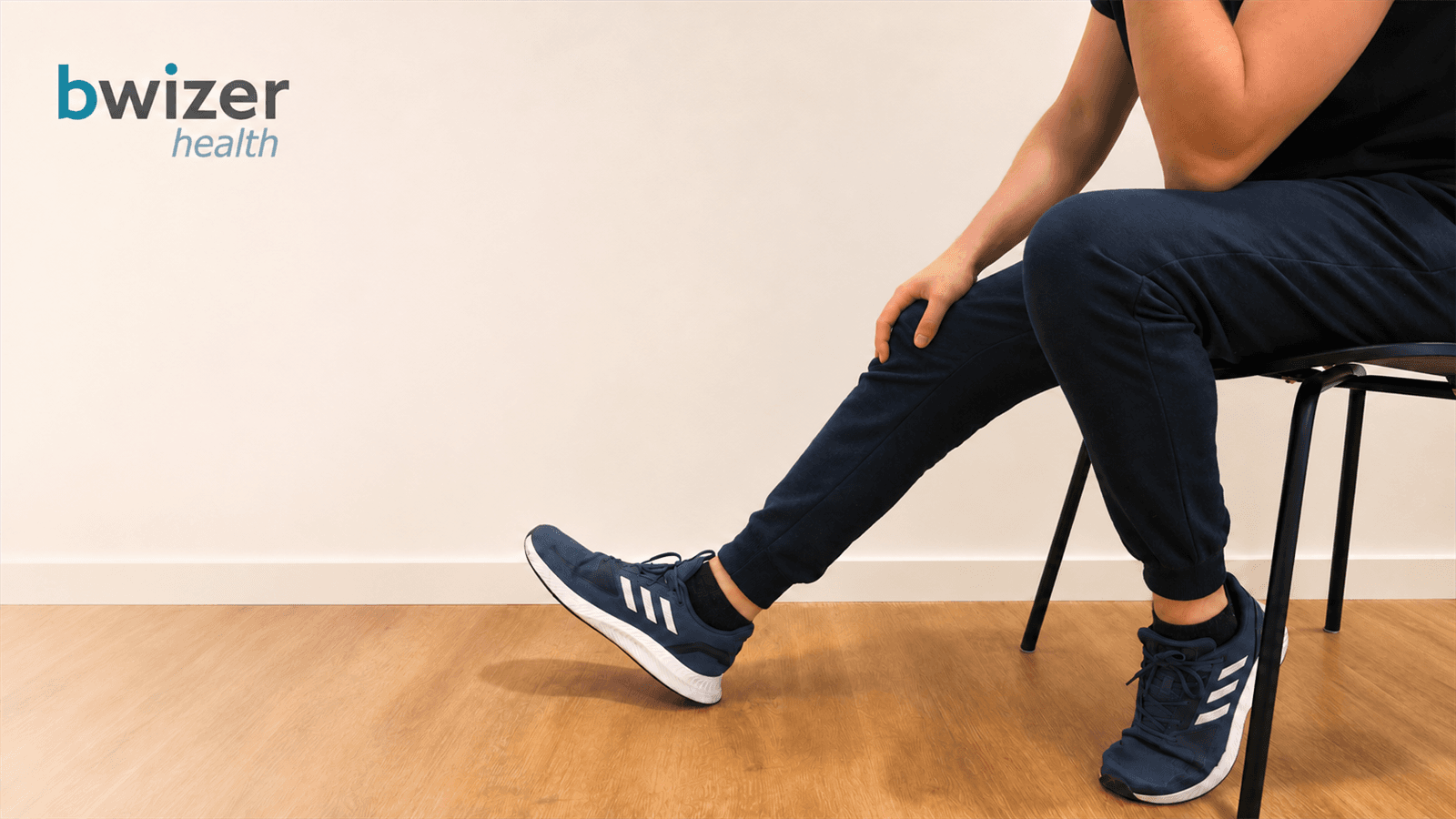
For some people, swelling develops after several hours of standing or sitting, even in the absence of an underlying medical condition. Gravity, together with reduced muscle activity during prolonged periods in the same position, can make it harder for fluid to return from the lower limbs.
This type of swelling is often more noticeable at the end of the day and improves after rest. However, swelling can also be associated with health conditions that require assessment.
How can physiotherapy help?
Physiotherapy can support the management of swelling through an individual assessment and strategies tailored to each person’s needs.
Movement and therapeutic exercise
Walking and regularly moving the ankles and legs activate the muscles and support venous return. Research suggests that movement may help prevent fluid build-up linked to spending long periods in static positions.
Elastic compression
Compression stockings apply pressure to the lower limbs, helping to limit fluid accumulation. Studies involving people who spend many hours standing or sitting at work have found benefits in reducing both swelling and discomfort.
Compression should be selected according to each person’s individual characteristics and clinical circumstances.
Other therapeutic strategies
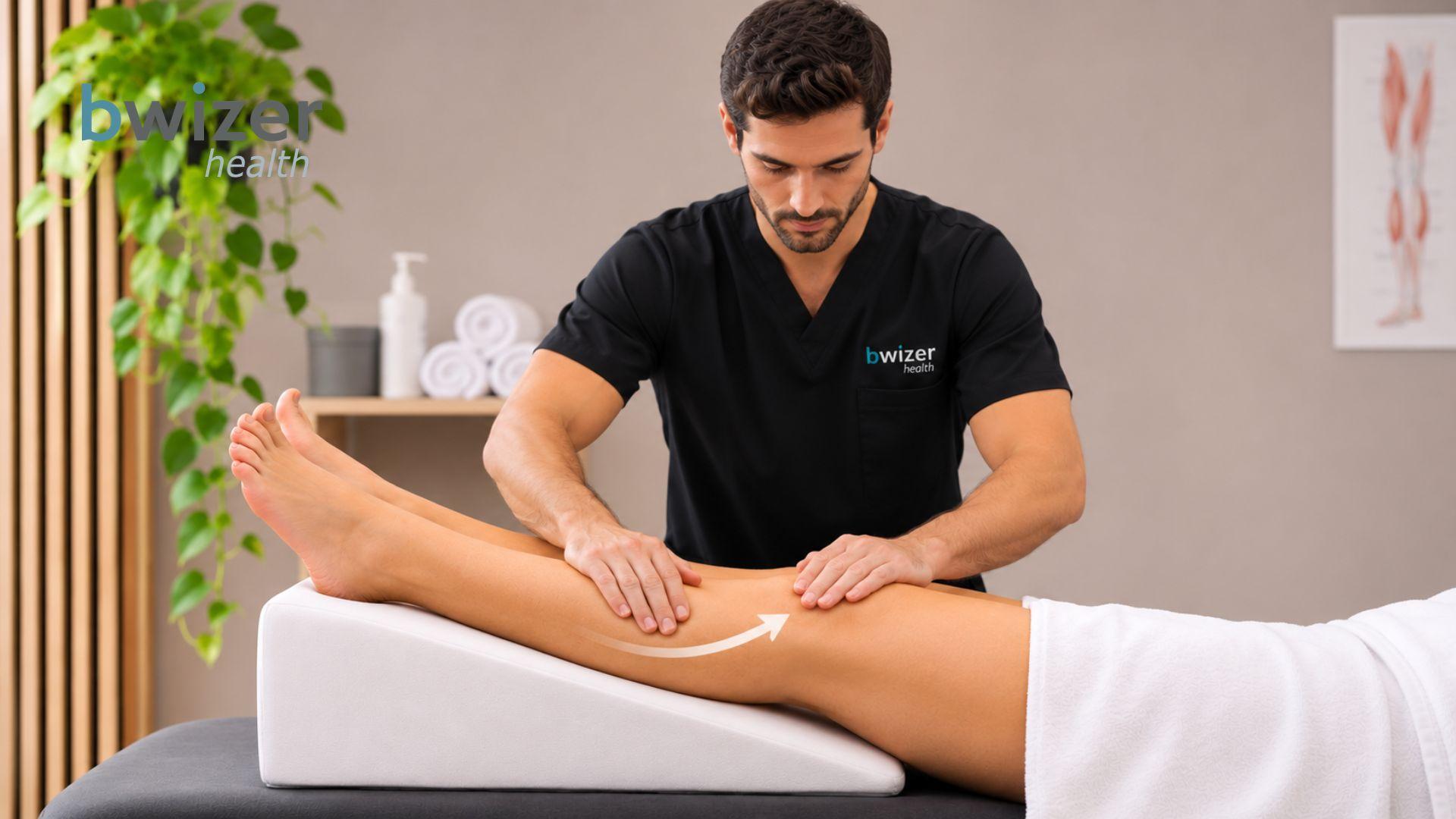
Resting away from prolonged dependent positions and exercising in water may help in certain situations. Manual lymphatic drainage may also provide a feeling of relief and lightness, although evidence that it objectively reduces swelling in people without an associated medical condition remains limited.
When should you seek help?
Not all swelling has the same cause. If it persists, appears without an obvious explanation or progressively worsens, it is important to seek a clinical assessment.
Sudden swelling in one leg, particularly when accompanied by pain, warmth or redness, requires urgent medical assessment. If you also experience shortness of breath or chest pain, seek emergency medical assistance.
An approach tailored to each person
Managing swelling starts with understanding when it occurs, what makes it worse and how it affects everyday life.
Through assessment and individualised interventions, physiotherapy can help manage swelling, relieve discomfort and encourage movement habits that better suit each person’s routine.
At Bwizer Health, we help you find strategies tailored to your needs and goals. Book your appointment.
References
Gianesini S, et al. (2023). Randomized controlled trial on occupational graduated compression clinical and cost-effectiveness. International Angiology. https://doi.org/10.23736/S0392-9590.23.05030-7
Hecko S, et al. (2022). Improvement of occupational leg edema and discomforts (RCT). Clinical Hemorheology and Microcirculation. https://doi.org/10.3233/CH-211366
Wall R, et al. (2020). Physiological changes during prolonged standing and walking considering age, gender and standing work experience. Ergonomics. https://doi.org/10.1080/00140139.2020.1725145
Mosti G, Caggiati A. (2021). The effects of water immersion and walking on leg volume, ankle circumference and epifascial thickness in healthy subjects with occupational edema. Phlebology. https://doi.org/10.1177/0268355520984065
Alves BL, et al. (2020). Immediate effects of manual lymphatic drainage in healthy women. Manual Therapy, Posturology & Rehabilitation Journal. https://doi.org/10.17784/mtprehabjournal.2020.18.771
Patel H, Skok C, DeMarco A. (2022). Peripheral Edema: Evaluation and Management in Primary Care. American Family Physician, 106(5), 557–564. https://www.aafp.org/pubs/afp/issues/2022/1100/peripheral-edema.html
Rabe E, et al. (2020). Risks and contraindications of medical compression treatment – A critical reappraisal. Phlebology. https://doi.org/10.1177/0268355520909066