Dancing with Pain: When Could It Be a Sign That You Need an Assessment?

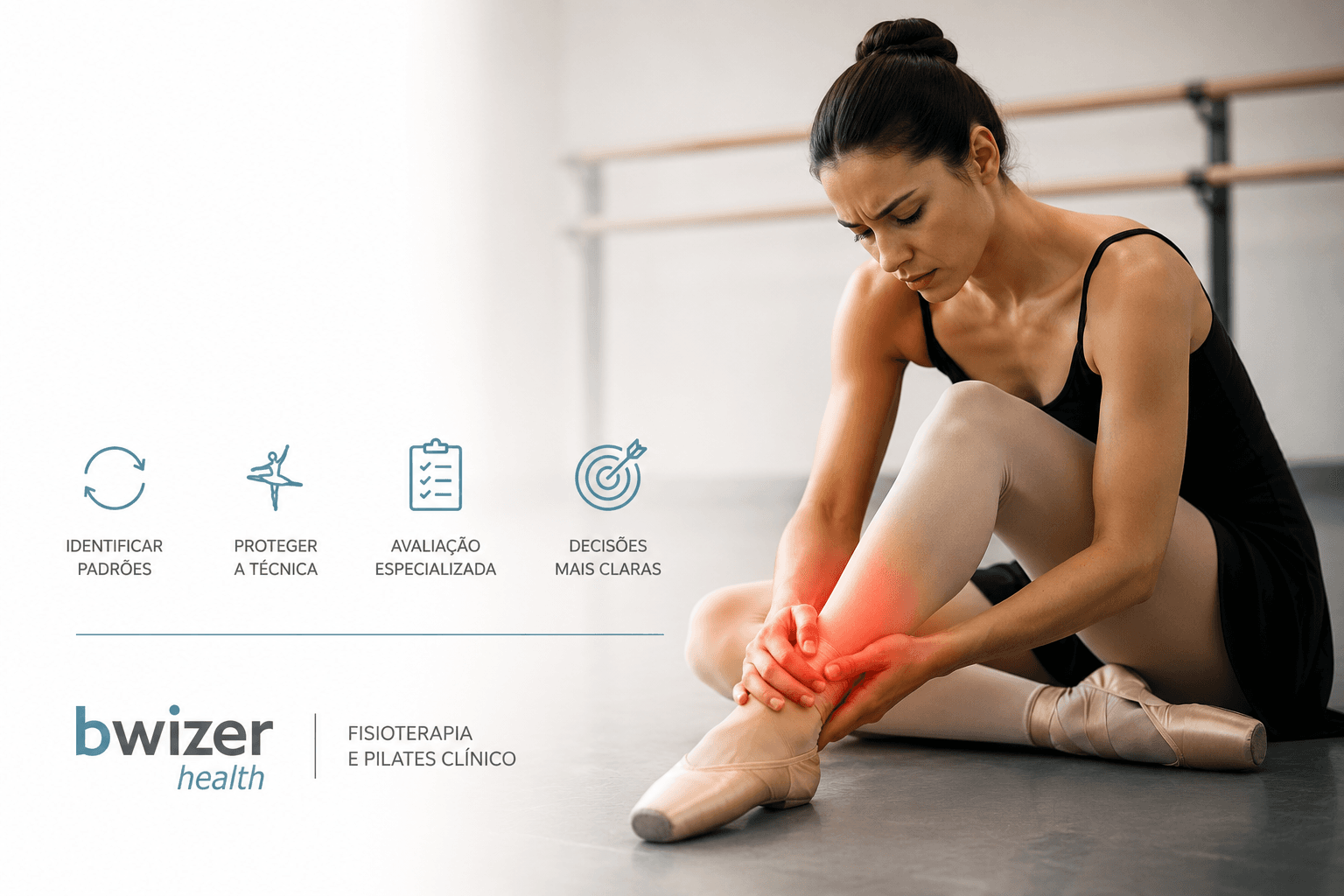
Dancing with pain does not always mean you need to stop. However, recurring or worsening pain, or pain that changes your technique, deserves assessment. The sooner the pattern is identified, the clearer the decision-making process is likely to be.
Not all pain experienced during dance is serious. However, some types of pain deserve attention.
Dance requires strength, control, range of motion, repetition, and the ability to tolerate physical load. Therefore, it is normal for a dancer to experience muscle fatigue, discomfort, or a feeling of effort after a demanding class, rehearsal, or performance.
The problem begins when pain is no longer temporary, keeps returning, increases over time, or changes the way the body moves.
In dance, many dancers continue training despite pain. This may happen because of discipline, fear of stopping, performance schedules, or the belief that “it is part of being a dancer”. However, when pain becomes recurrent, the body may begin to compensate. One area may start protecting itself, another may become overloaded, and technique may gradually change without the dancer noticing.
A clinical assessment is not only about identifying “where it hurts”. It is about understanding the full context: dance style, weekly training load, movements that trigger symptoms, injury history, mobility, strength, movement control, fatigue, and the dancer’s goals.
1. The pain always appears during the same movement
One of the most important signs is repetition.
Does the pain appear during relevé? Plié? Pointe work? Landing? Arabesque? Floorwork? A specific jump?
When pain repeatedly appears during the same movement, there may be a relationship between the symptoms and a specific demand related to load, technique, or movement control. This does not necessarily mean there is a serious injury. However, it is valuable information and should not be ignored.
An assessment can help determine whether the pain is related to the area where it is felt or whether it may be influenced by compensations elsewhere, such as the foot, ankle, knee, hip, pelvis, or spine.
2. The pain increases from week to week
Pain that improves with appropriate recovery may represent a temporary response to training load. However, if pain progressively increases from week to week, it may indicate that the body is struggling to recover or that there has been a recent change in training demands.
This is particularly relevant after increases in class frequency, rehearsals, performances, technical intensity, changes in footwear, flooring, or choreography.
In these situations, the question should not only be “where does it hurt?”. It is also important to ask: “What has changed in the training load?”
3. The pain changes the way you dance
This is one of the most relevant signs.
If pain causes a dancer to avoid loading a limb, lose confidence, reduce range of motion, alter alignment, avoid certain movements, or compensate through the lower back, knee, or foot, movement quality may begin to change.
These changes can be subtle. A dancer may continue performing, but the body may no longer be distributing load in the same way.
When pain affects movement patterns, an assessment becomes particularly important. Not necessarily to stop dancing immediately, but to understand what may need to be adapted, monitored, or addressed.
4. There is instability, locking, swelling, or loss of strength
Some signs require greater attention.
A feeling of instability, a joint that locks, swelling, loss of strength, inability to bear weight, or pain that prevents normal function should not be considered part of normal dance practice.
Dance often requires extreme ranges of motion and repeated exposure to physical demands. Therefore, signs of reduced support, control, or impact tolerance should be assessed individually.
Continuing to train without understanding these signs may maintain compensations and delay recovery.
5. The pain forces you to compensate in order to continue
Many dancers are highly skilled at adapting. This ability is valuable, but it can also hide problems.
If you need to “work around” pain to finish class, change your weight distribution, avoid jumps, reduce turnout, tighten your lower back, hold your breath, or modify your movement, a compensatory strategy may be developing.
An assessment helps determine whether this adaptation is appropriate at that stage or whether it may be contributing to additional overload.
What you can do today
For one week, keep track of four things:
- Where you feel pain.
- Which movement triggers it.
- Whether it changes the way you dance.
- How long it takes for the pain to disappear.
This record can help identify patterns. It also makes the assessment more objective by allowing symptoms to be linked to training load, technique, and recovery.
You can also explore our risk calculator.
How Bwizer Health can help
At the Dancer Clinical Assessment, we look beyond the location of pain. We assess movement within the specific context of dance.
Depending on the situation, we may evaluate mobility, strength, pelvic and spinal control, turnout/en-dehors, single-leg balance, plié, relevé, jumps, landing mechanics, fatigue, injury history, and technical goals.
The aim is to create an individualised plan: what you can continue doing, what may need adaptation, what needs to be improved, and what the most appropriate next step is.
Book your assessment: Dancer Clinical Assessment
This article is for educational purposes and does not replace an individual assessment. Seek professional evaluation if pain is severe, worsening, prevents weight-bearing, occurs with significant swelling, locking, loss of strength, night pain, numbness, tingling, or loss of sensation.
References
Kenny, S. J., Palacios-Derflingher, L., Whittaker, J. L., & Emery, C. A. (2018). The influence of injury definition on injury burden in preprofessional ballet and contemporary dancers. Journal of Orthopaedic & Sports Physical Therapy, 48(3), 185–193. https://doi.org/10.2519/jospt.2018.7542
Critchley, M. L., Ferber, R., Pasanen, K., & Kenny, S. J. (2022). Injury epidemiology in pre-professional ballet dancers: A 5-year prospective cohort study. Physical Therapy in Sport, 58, 93–99. https://doi.org/10.1016/j.ptsp.2022.10.001
Junge, A., Hauschild, A., Stubbe, J. H., & van Rijn, R. M. (2024). Health problems of professional ballet dancers: An analysis of 1627 weekly self-reports on injuries, illnesses and mental health problems during one season. Sports Medicine - Open, 10, 79. https://doi.org/10.1186/s40798-024-00753-1
Rinonapoli, G., Graziani, M., Ceccarini, P., Razzano, C., Manfreda, F., & Caraffa, A. (2020). Epidemiology of injuries connected with dance: A critical review on epidemiology. Medical Glasnik, 17(2), 256–264. https://doi.org/10.17392/1201-20
Hrubes, M. (2019). Return-to-dance strategies and guidelines for the dancer. In L. E. Elson (Ed.), Performing arts medicine (pp. 139–149). Elsevier. https://doi.org/10.1016/B978-0-323-58182-0.00015-8
Hrubes, M., & Janowski, J. (2021). Rehabilitation of the dancer. Physical Medicine and Rehabilitation Clinics of North America, 32(1), 1–20. https://doi.org/10.1016/j.pmr.2020.08.003